
National Pavilions – Venice Biennale 2026
In every other year since 1895, countries from all around the world have been invited to curate an exhibition representing their nation at the Venice Biennale. Some occupy permanent pavilions in the Giardini and others rent spaces across the city, from palazzos to warehouses. The result is a city-wide exhibition that is part art fair, part diplomatic exercise, part cultural competition.
This year, the Biennale brings together 100 national participations spread across the historic pavilions at the Giardini, the Arsenale, and some 46 venues throughout the city. This represents a significant expansion from the 86 nations that took part in 2024.
United Kingdom
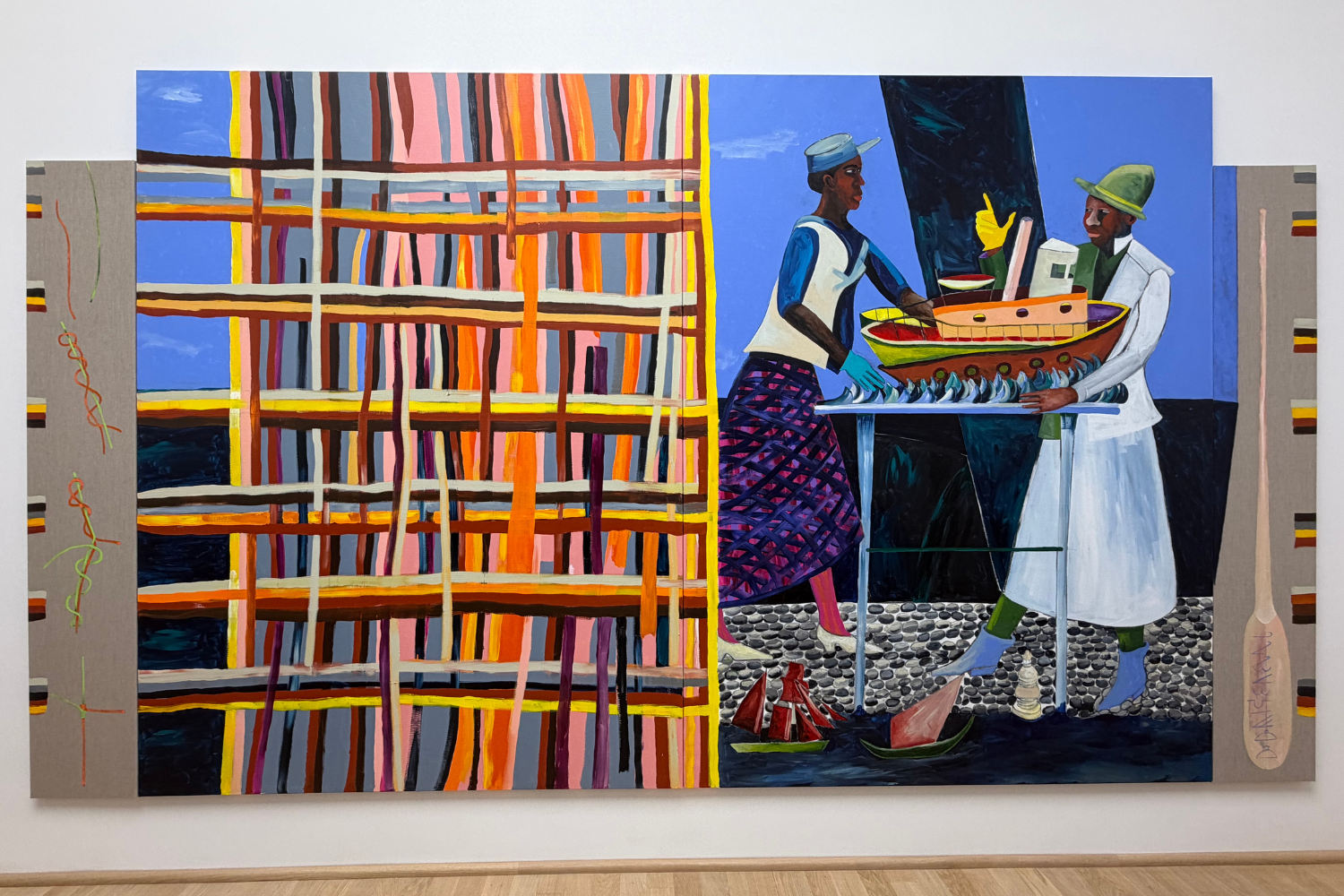
Lubaina Himid, a Turner Prize-winning artist born in Zanzibar, whose career has been shaped by questions of race, memory and belonging, represents the United Kingdom. Her solo exhibition, Predicting History: Testing Translation consists of five large paintings depicting industrious figures in odd and disconcerting backgrounds, each dealing, in their own way, with the challenge of adapting to what seems an unfamiliar environment. One room depicts two architects with opposing instincts: one designs a home on wheels, built for escape; the other constructs a permanent shelter for those who choose to stay. Elsewhere, tailors measure and cut garments that seem to drift across time, while in another room a wash of pink fills the canvas only partially, leaving areas deliberately bare. The pavilion’s neoclassical architecture is itself also part of the work’s meaning, reframed by Himid as an image of Britain: initially open, yet quietly unsettled, with sound, text and imagery introducing tension beneath appearance.
India
Continuing the themes of diaspora and belonging, the India Pavilion, making its first appearance at the Biennale since 2019, presents Geographies of Distance: Remembering Home. Set in a dimly lit space, the exhibition brings together five artists (Alwar Balasubramaniam, Ranjani Shettar, Sumakshi Singh, Skarma Sonam Tashi, and Asim Waqif) each working in materials associated to Indian tradition: clay, bamboo, thread, embroidery. The sense of craft is very strong and it continues to be central to contemporary Indian culture, not just something from the past. Across all the rooms, home is treated as something partial and fragmented, where the artists recreate how home is perceived by people who have left it or lost it.
Sumakshi Singh, for instance, has recreated in embroidery thread the house she grew up in full scale, but fragmented, its walls and rooms deliberately incomplete. Home, the work suggests, cannot be fully reconstructed because it was never truly permanent; it changes, gets demolished, and exists most vividly in memory.
Saudi Arabia
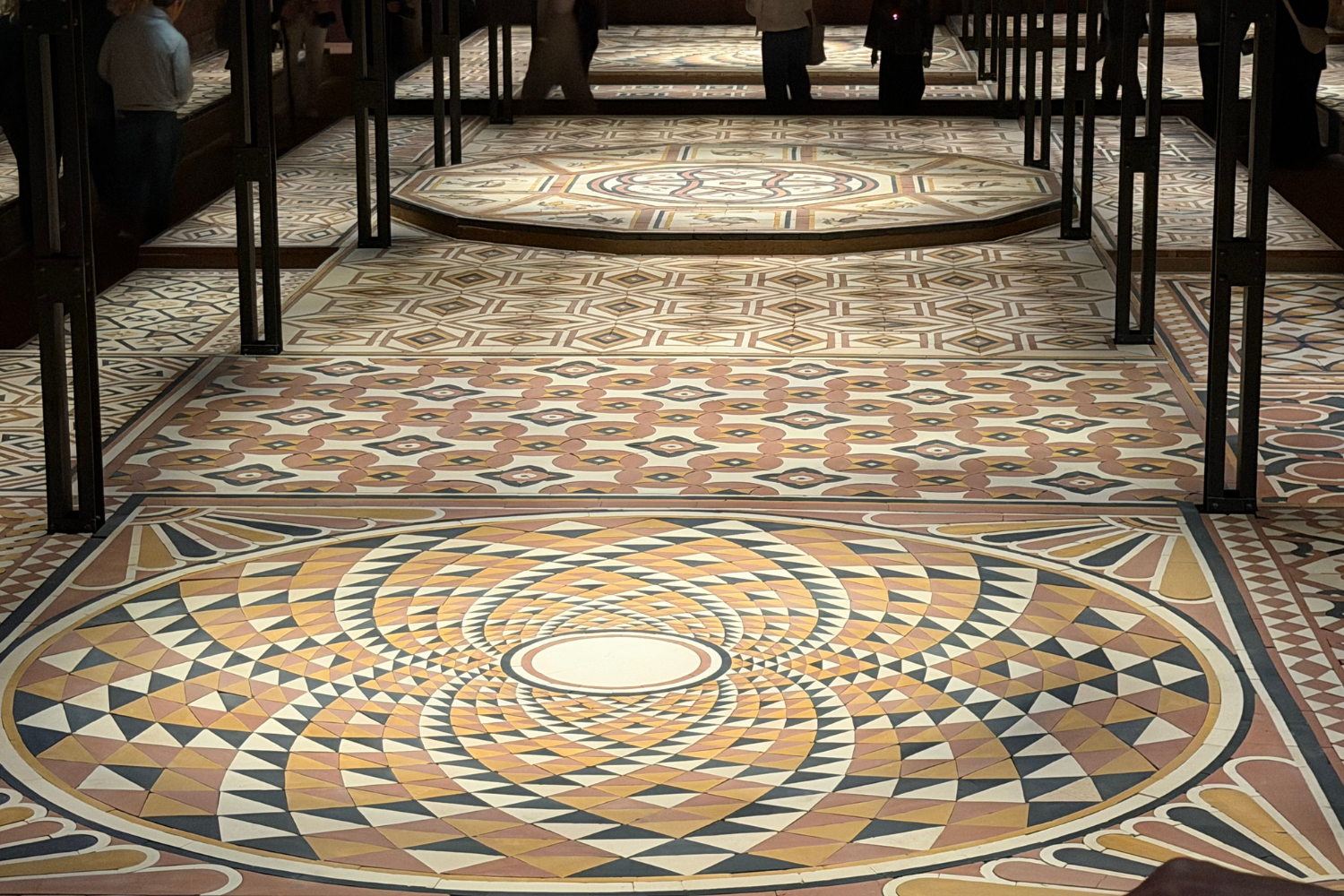
Palestinian-Saudi artist Dana Awartani has transformed the Saudi Pavilion into an imagined archaeological site, covering the floor with over 29,000 handmade clay tiles produced across 30,000 hours of labour in collaboration with 32 Saudi-based artisans. The geometric and floral patterns draw on heritage sites across Syria, Lebanon, and Palestine damaged or destroyed by war. The dark, stage-like lighting in the room draws the eye downward. The viewer is not standing above the work looking down, but moving through it, their footsteps becoming part of the experience. Awartani has spoken about wanting viewers to feel implicated in the destruction these patterns record.
Morocoo
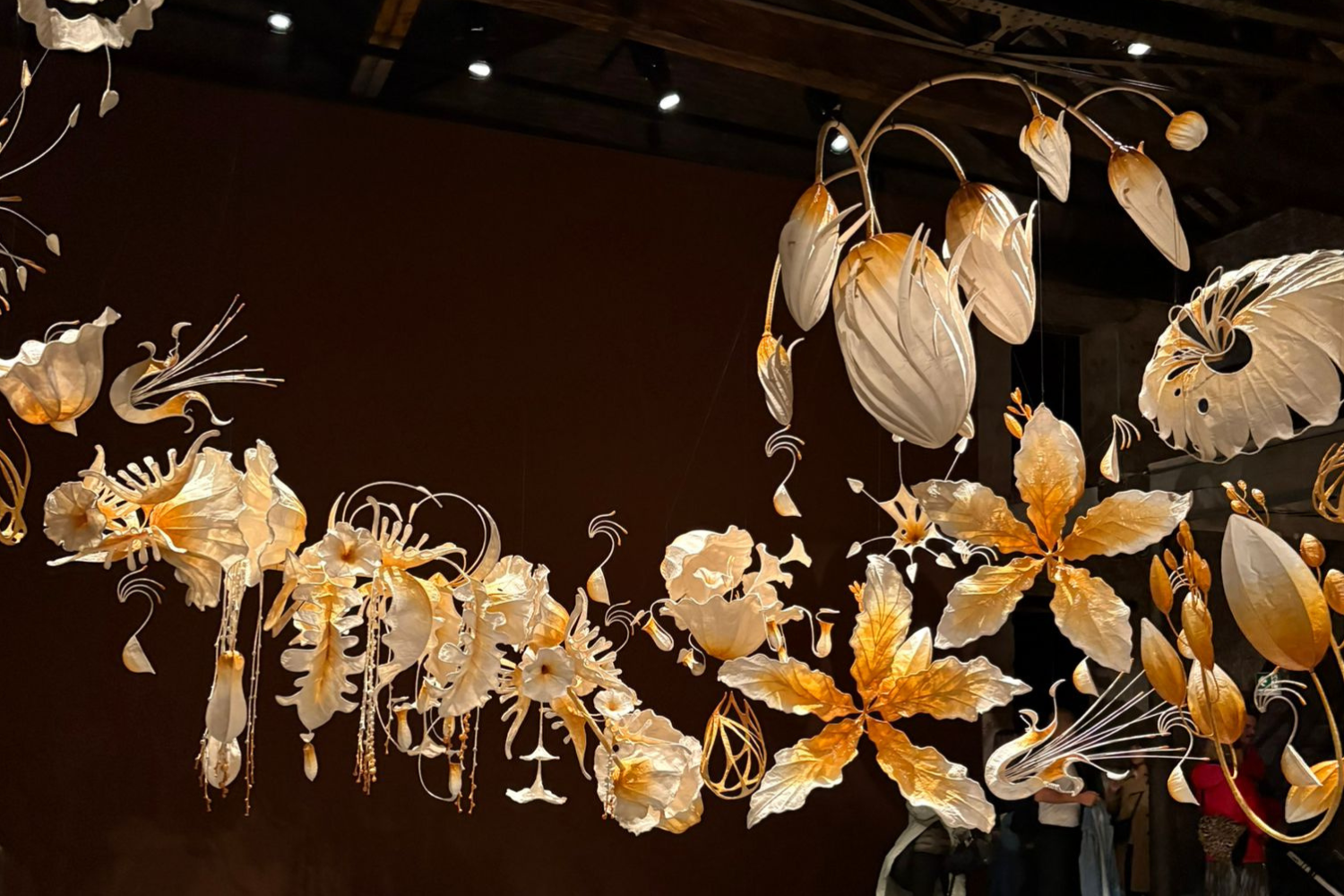
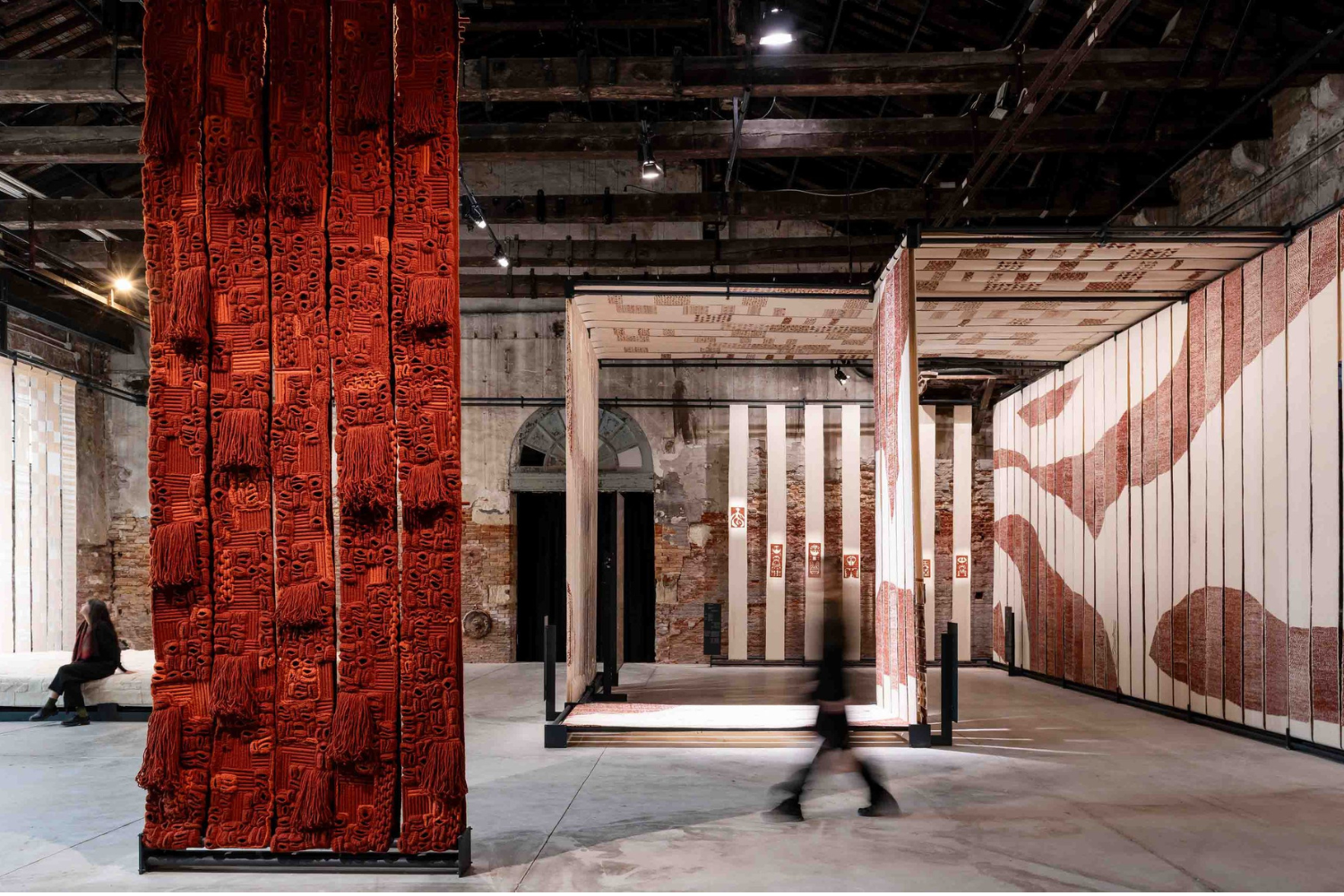
Morocco appears for the first time in the Arsenale with Asǝṭṭa (an Amazigh term for ritual weaving) by Marrakech-based artist Amina Agueznay. The result of six months of work with 166 artisans from across the country, the installation brings together weaving, embroidery, basketry and jewellery-making into panels that wrap the walls and drape from the ceiling. Shimmering sequins evoke light on water, abstract forms suggest Venice’s map, and Murano glass references the historic trade routes between Morocco and the city. The exhibition is centred on the act of collective making, in which the artisans are not background labour, but co-authors, credited as such. Like the India Pavilion, Morocco makes the case that craft is not a relic from the past, but a contemporary method.
Argentina
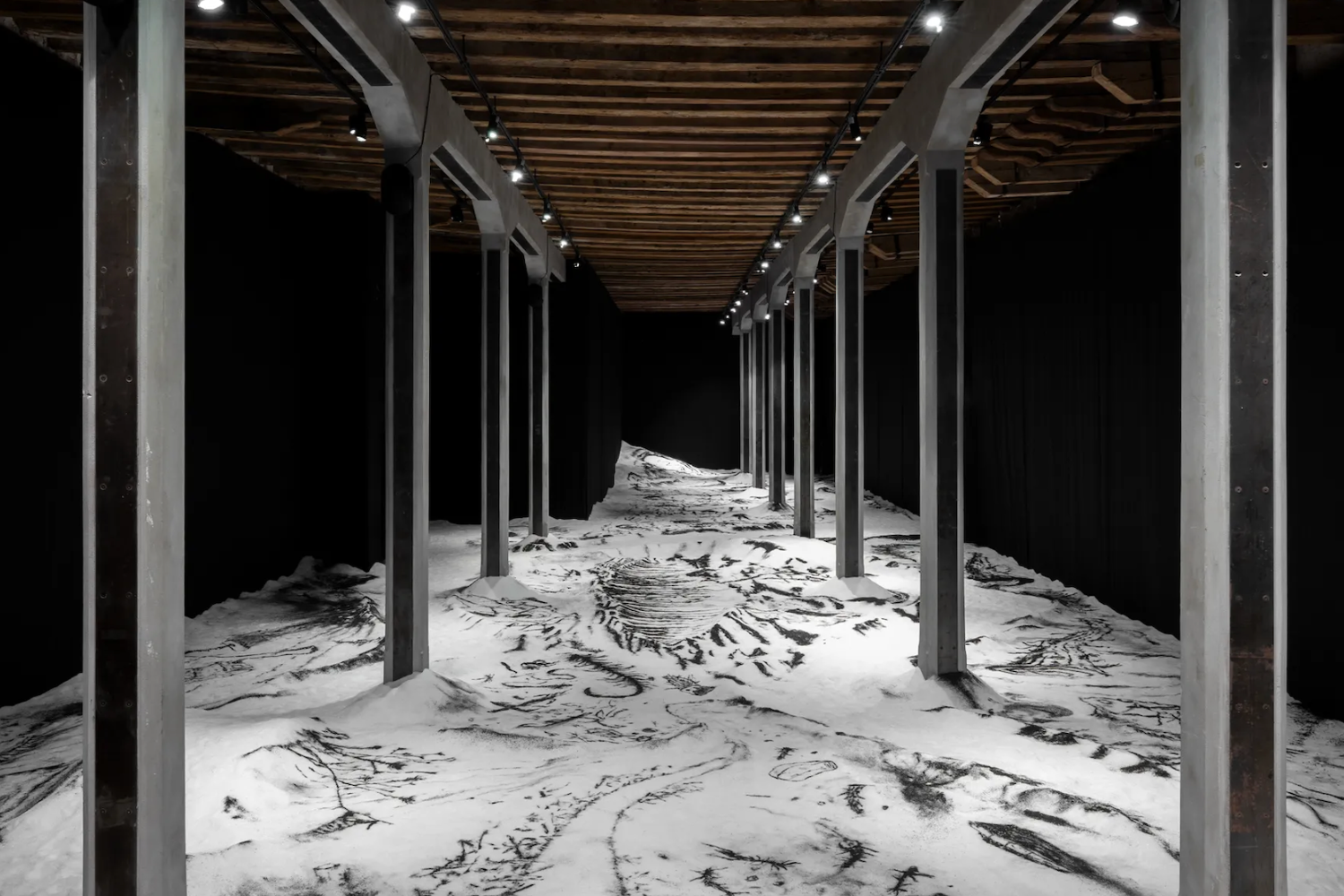
Artist Matías Duville has covered the entire floor of the Argentine Pavilion with a monumental drawing in salt and charcoal, materials chosen for their instability and capacity to register change. As visitors move through the space, the surface shifts and deteriorates, making the act of circulation an integral part of the work itself. The title, Monitor Yin Yang, and the balance of black and white suggest opposing forces in constant negotiation. The more people pass through, the more the image erodes, it proposes a reflection on territory, erosion, and the trace that human presence inevitably leaves behind.
Japan
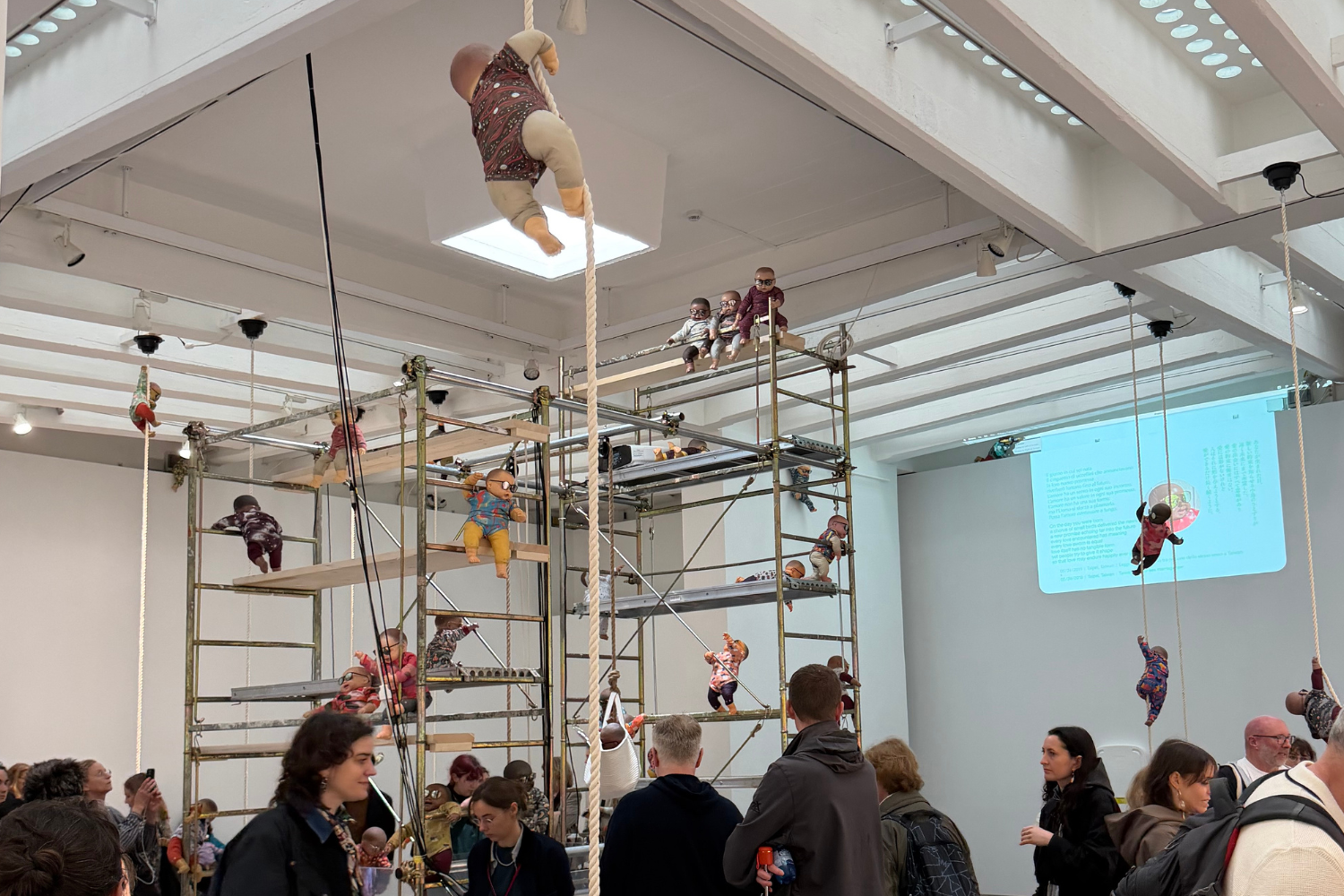
Ei Arakawa-Nash, a queer Japanese-American performance artist born in Fukushima and based in Los Angeles, approaches the pavilion from a recent personal experience: in 2024, Arakawa-Nash and their partner became parents to twins through surrogacy, and the arrival of new life sits at the heart of the entire project. Titled Grass Babies, Moon Babies, the exhibition fills the pavilion with 208 baby dolls, some propped on tables, which visitors are invited to pick up and carry through the space as if temporarily taking on the role of caregiver. At the end of the visit, guests change the doll’s diaper and scan a QR code that generates a short poem tied to each baby’s assigned birthday. The act of holding something fragile in a public space, among strangers, is intended as a political gesture about the labour of care and about what it means to raise children at the intersection of personal lives and larger historical forces. Arakawa-Nash has also initiated the first-ever collaboration between the Japanese and Korean national pavilions, making this one of the edition’s most radical propositions.
Austria
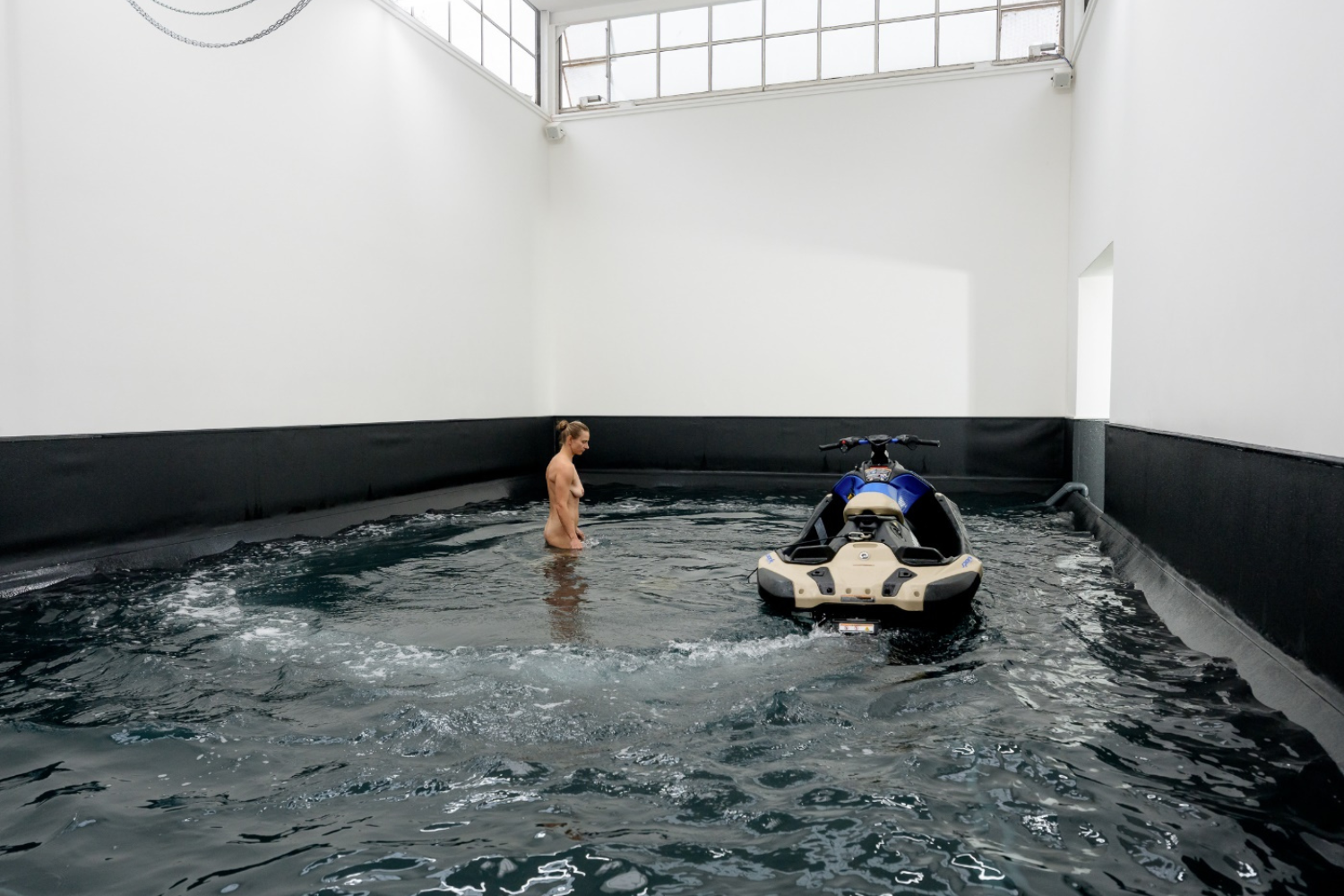
The Austrian Pavilion has become the most talked-about of the Biennale, with queues beyond two hours and warning signs outside. Choreographer and performance artist Florentina Holzinger has transformed the pavilion into SEAWORLD VENICE: simultaneously an underwater amusement park, a sewage treatment plant, and a sacred building. Inside, the pavilion is entirely flooded; a naked performer on a jet ski drives around through the water, a commentary on humanity’s compulsion to dominate nature and on the mass tourism overwhelming Venice itself. In the courtyard, a second performer lives inside a tank sustained by a closed-loop system that collects and purifies bodily fluids from the Biennale’s own bathrooms, deliberately quoting Giorgione’s painting Sleeping Venus, evoking the classical beauty of Venice into uncomfortable proximity with its ecological present.
What does it mean to represent a country through art today? When each country’s commissioning body selects an artist for Venice, it is making a statement about who it is, what it values, and what it wants the world to see. This is rarely an artistic decision alone, but also a cultural and political one. In the act of choosing an artist, a country holds a mirror to itself. The Venice Biennale, then, is not only an art exhibition. It is a stage upon which national self-image, cultural ambition, and geopolitical positioning are acted out.
Ana Teles for London Art Walk
May 2026