
A Must-See Museum: Inhotim at Twenty and Brumadinho on the World Stage
It is neither a sculpture park nor merely a museum with a garden. Inhotim is a place where art was conceived to coexist with the landscape, built in a constant, living dialogue with it. Recently, The New York Times ranked the institute 24th on its list of “52 Places to Go in 2026”, making it the only Brazilian destination selected (https://www.nytimes.com/interactive/2026/travel/places-to-travel-destinations-2026.html). As the Times rightly points out, a single day isn’t nearly enough to see it all. The scale is staggering: roughly 1,862 works by over 280 artists from 43 countries, all set within a Botanical Garden home to 4,300 rare species across 140 hectares.
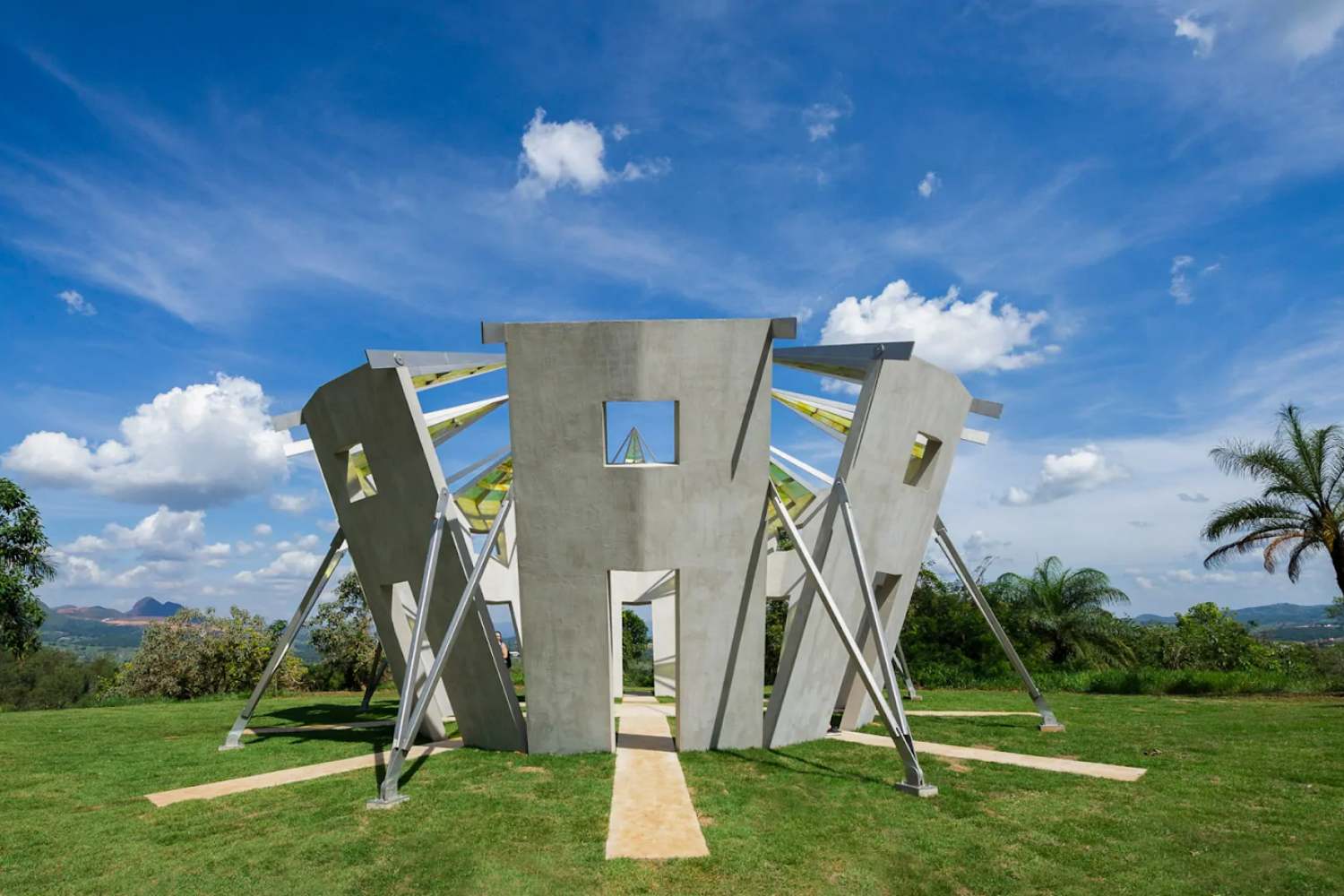
Celebrating its 20th anniversary, Inhotim has cemented its status as one of the world’s most remarkable cultural institutions. Its magic lies in bespoke galleries designed for specific works, permanent installations that simply couldn’t exist in a traditional white-cube museum due to their dimensions or technical specifications. Stepping into each space is like entering a new world, where materiality and form merge with the natural light and terrain. The botanical garden complements the experience, making Inhotim an international destination for botany and landscaping as well. Each visit leaves intertwined memories: a feeling that an installation can generate alongside discovering an exotic plant, reinforcing the idea that this museum builds itself for each person according to their own pace and interests – interests that themselves shift and change throughout life.
From private passion to public heritage
Dreamed up in the 1980s by the Minas-born entrepreneur and major art collector Bernardo de Mello Paz, Inhotim began as a private retreat for experimental art and gardens. Between 2000 and 2004, the landscape was envisioned by Pedro Nehring and developed by Luiz Carlos Orsini, forging that inseparable bond between art, architecture, and nature. A milestone came in 2002 with the opening of the True Rouge Gallery, the first monographic pavilion designed for the work it houses. Tunga’s installation, featuring glass vessels suspended in nets, sponges, and felt soaked in a deep red liquid, is a seminal example of his work: a tense, alchemical exploration of organic and industrial forms.
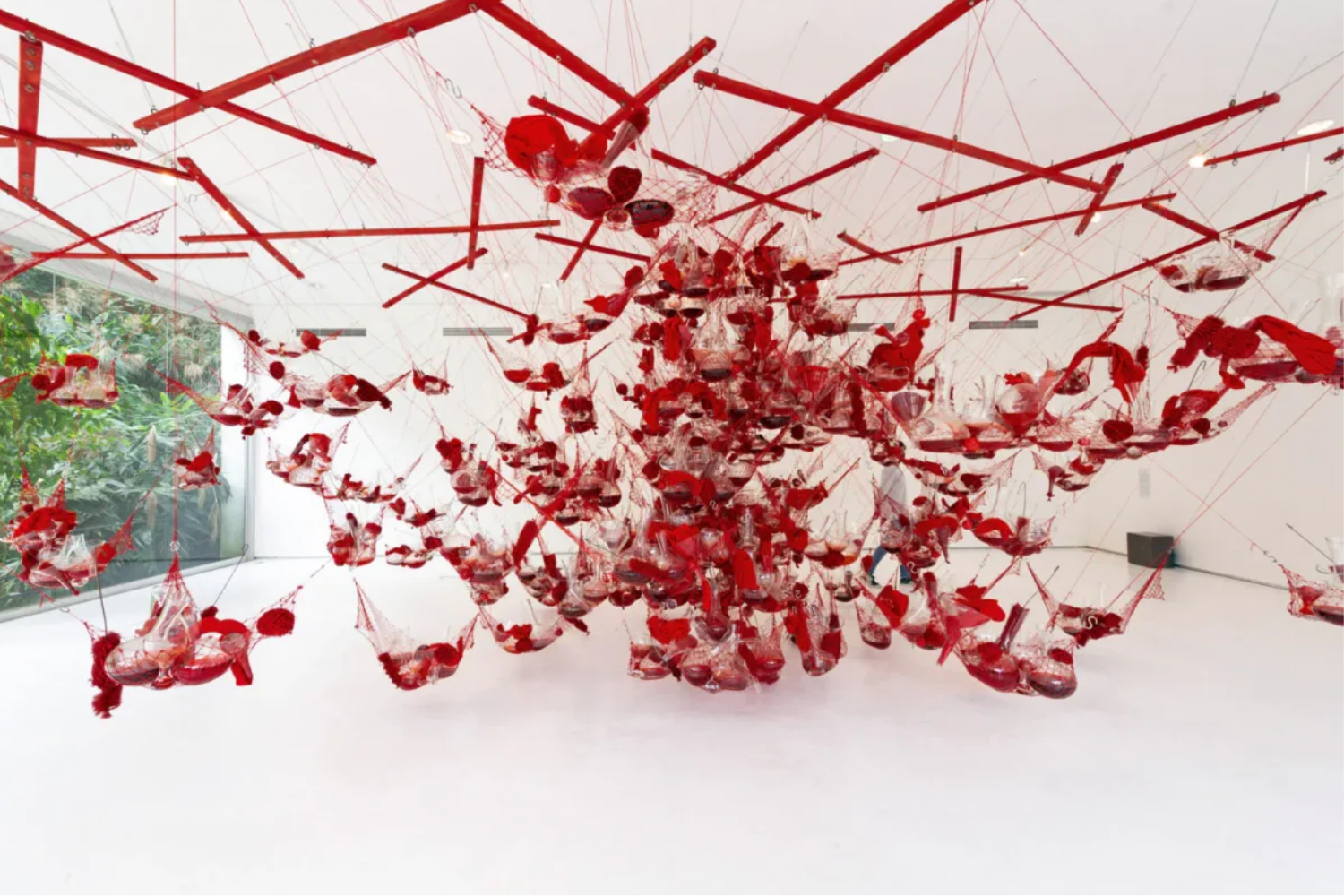
In 2006, Inhotim opened to the public, establishing itself as an open-air museum with heavyweights like Tunga, Cildo Meireles, Yayoi Kusama and Adriana Varejão. By 2022, Bernardo Paz donated the entire collection and territory to the institute, formalizing its current institutional structure and reinforcing its mission as a public asset.
Among the collection’s highlights, the “Cosmococas” (1973) by Hélio Oiticica and Neville D’Almeida remain peerless. These immersive, multi-sensory environments demand active participation, with body, sound, and space colliding. Looking back at my own visit in 2012, the memory that sticks most vividly is the track Pipoca by Caetano Veloso echoing through the room, perfectly capturing Oiticica’s vision of art as a living experience. Another pillar is Cildo Meireles’ “Desvio para o Vermelho” (1967–1984). Spread across three environments, it moves from monochromatic saturation to total shadow, cementing Meireles as a master of installations that challenge perception.
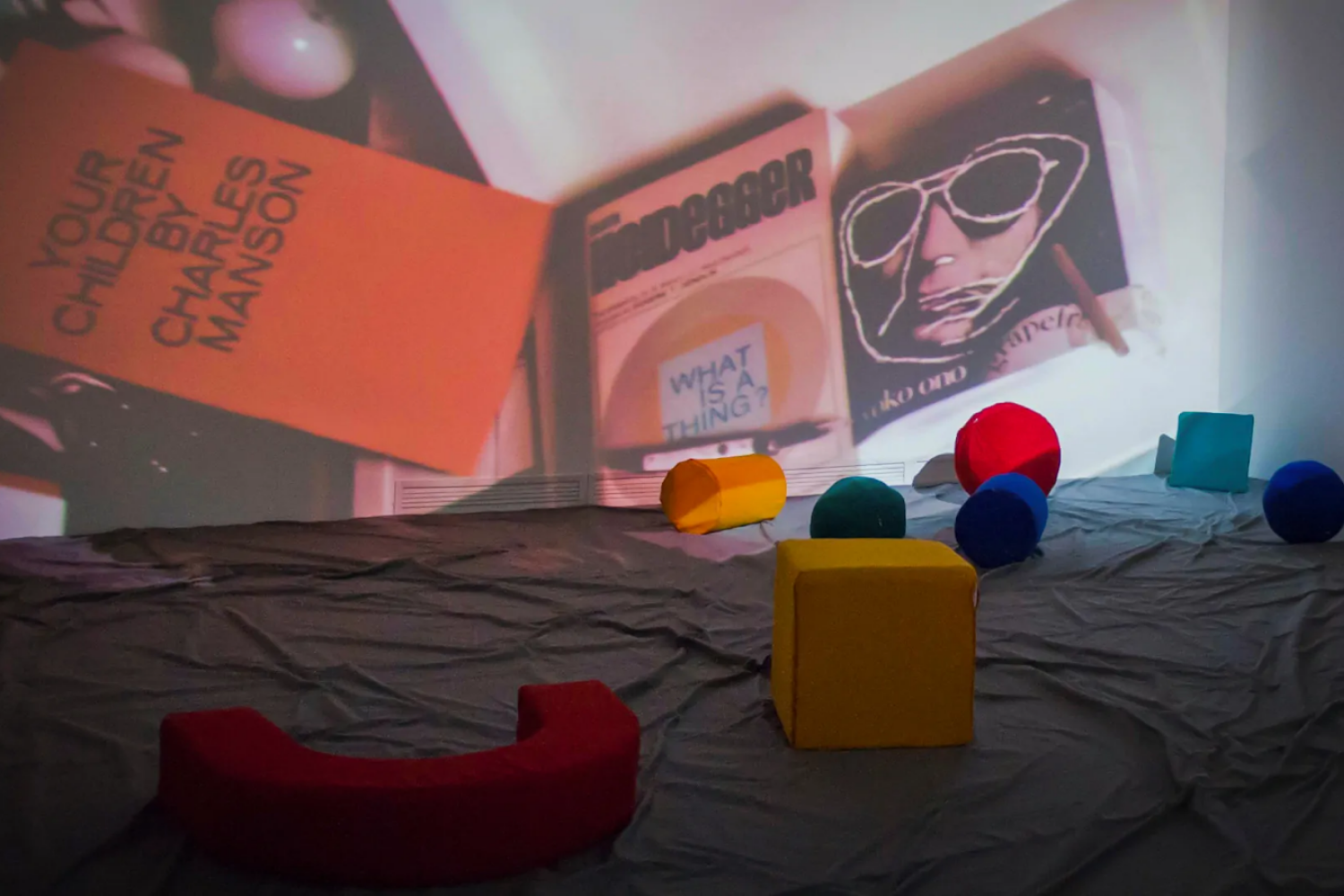
Of course, there are countless other vital works not mentioned here, by Adriana Varejão, Abdias Nascimento, Paulo Nazareth, and Rivane Neuenschwander, to name a few. This is the beauty of Inhotim: it is an open invitation to return. Every visit reveals new layers; every return promises a discovery.
Twenty years on: What’s next?
As it hits its two-decade mark as a public institution in 2026, Inhotim has announced a special programme of major exhibitions, new commissions, and expansions. Highlights include Grada Kilomba, the Lisbon-born artist and thinker whose film and performance work deconstructs the legacies of colonialism; Paulo Nazareth, who explores ancestry and the intersections of art and life; and Guatemala’s Edgar Calel, whose work dialogues with Indigenous cosmologies and ritual.
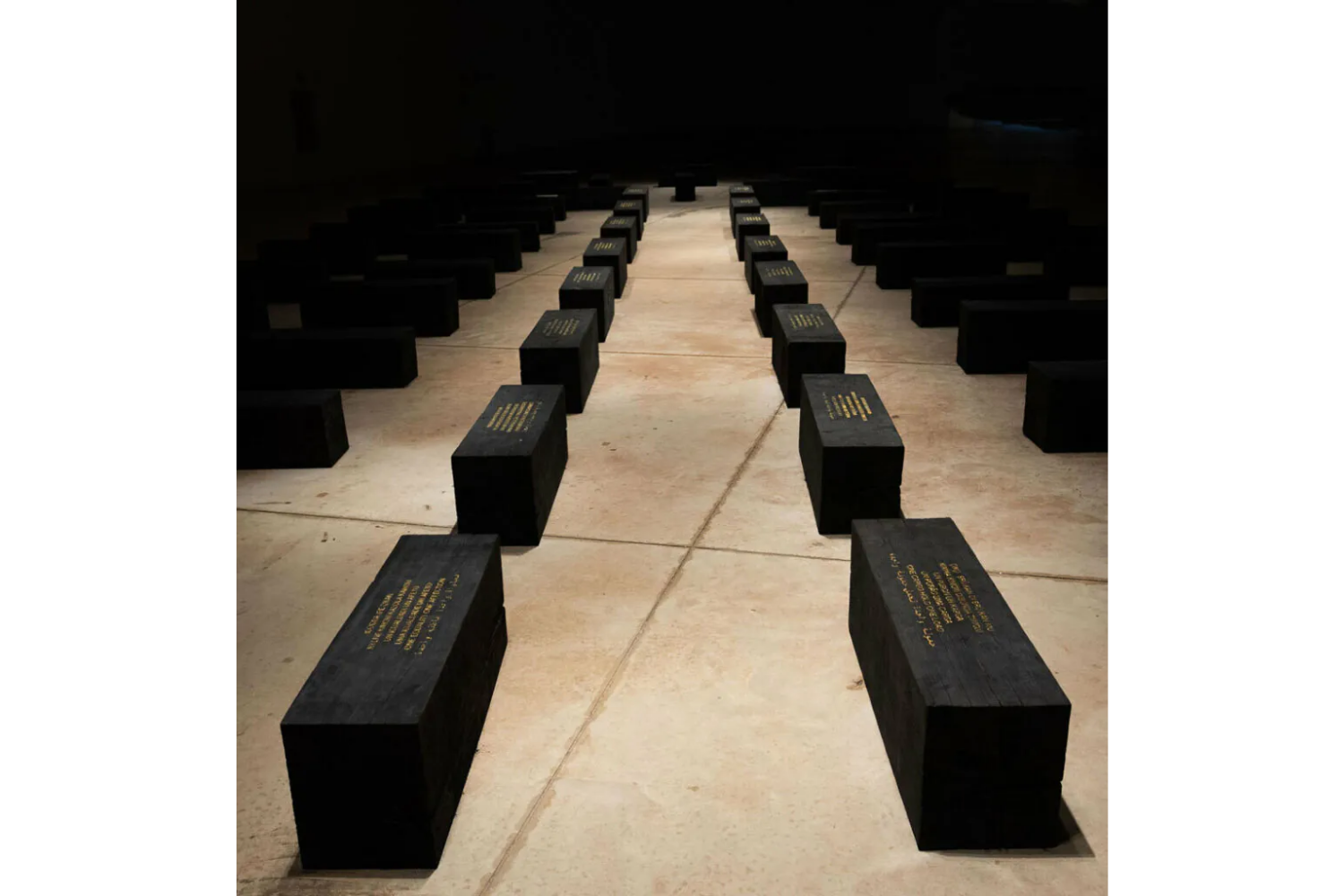
This curatorial shift pairs critical, decolonial voices with the strengthening of core collection hubs, such as the Cildo Meireles Gallery. Designed by Paulo Orsini to house ‘walk-in’ works like “Através” (1983–89), the aforementioned “Desvio para o Vermelho” and “Glove Trotter” (1991), this hub is set to expand in 2026 to include “Missão/Missões” (Como Construir Catedrais) (1987), a classic installation by Meireles reflecting on faith, power, money, and the violence against Indigenous peoples during the Jesuit missions in Brazil.
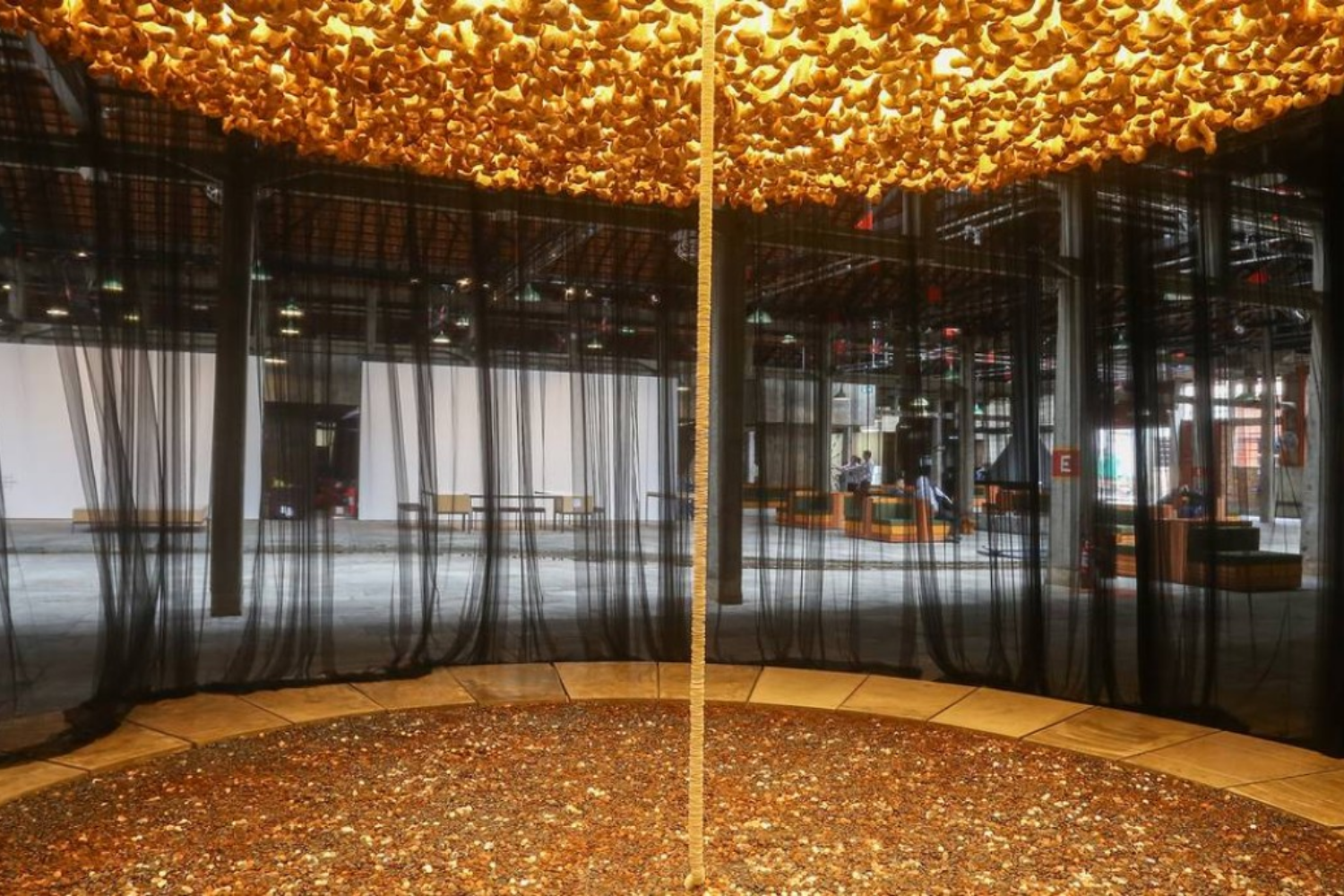
In April, Inhotim will open three more exhibitions: a retrospective of Dalton Paula, a new sculpture by Lais Myrrha exploring the intersections of architecture and political chaos, and works by rising talent Davi Jesus do Nascimento. Later in the year, the museum will celebrate its 20-year history with a dedicated exhibition and a reinstallation of “The Murder of Crows” (Janet Cardiff & George Bures Miller), a sound sculpture composed of 98 speakers blending ocean waves, bird wings, industrial noises, choral voices, and band instruments.
What has already been outlined is only part of the story; Inhotim has evolved into a complete destination. Local infrastructure is booming to meet the demand of global travellers, with hospitality gems like the Clara Arte Resort offering a blend of nature and high-end comfort. Even the food has reached a new level, with menus by chefs like Leo Paixão and Gabriel Sodré, while the museum’s own dining is now led by the Capim Santo Group, celebrating Brazilian ingredients and regional traditions.
Inhotim is anything but static. If you’ve never been, it’s an essential addition to any travel bucket list. If you have, take this as an invitation to return. Rediscover the museum with fresh eyes and explore the layers that have emerged since your last visit — I’m eager to do the same. There’s a reason The New York Times says one day isn’t enough, and they’re absolutely right.
Marilia Lopes for London Art Walk
February 2026