
V&A East
V&A East opened on 18 April 2026 as the final piece of East Bank, the ambitious cultural quarter built on the former Olympic Park site in Stratford. It is a modestly scaled building by the V&A’s standards: two permanent gallery rooms, a temporary exhibition space, and a top floor studio and terrace, but its ambitions are anything but modest.
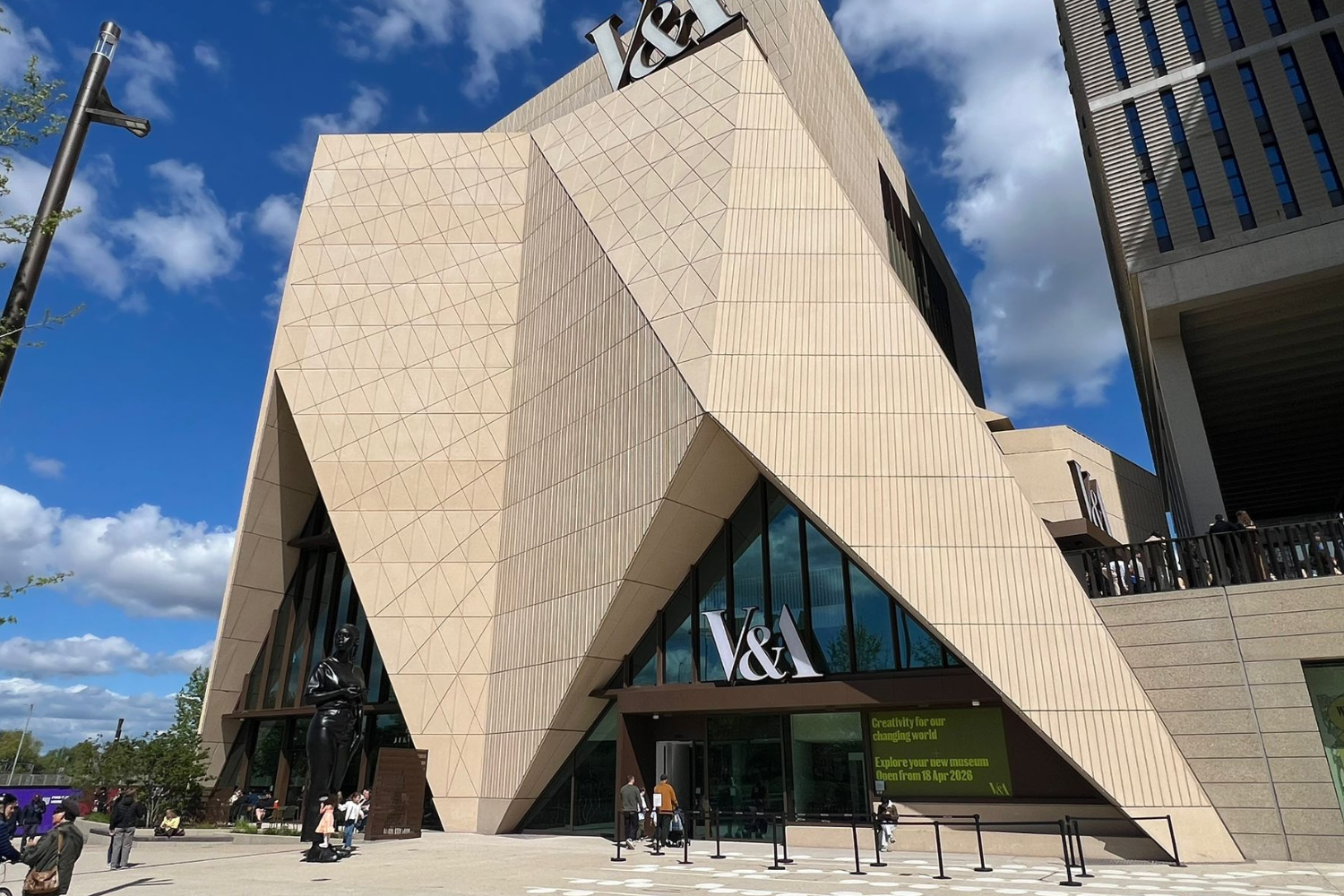
The V&A in South Kensington is one of the great encyclopaedic museums: architecture, furniture, sculpture, painting, decorative arts, fashion, each housed in its own wing, organised by discipline and chronology. What V&A East proposes instead is a deliberate dismantling of those hierarchies. Objects from entirely different periods, cultures, and disciplines all sit alongside one another.
The galleries are called ‘Why We Make’, describing the organising idea, and visitors can explore the most important issues in contemporary culture through the displays. A Japanese folding screen from around 1600 sits adjacent to a pair of Nike trainers; Korean pottery faces contemporary photography; a dress worn by Beyoncé hangs in conversation with computer-generated drawings. The effect is disorienting at first, but also liberating as you find yourself making connections with objects in ways that you might never have done in a traditional museum.
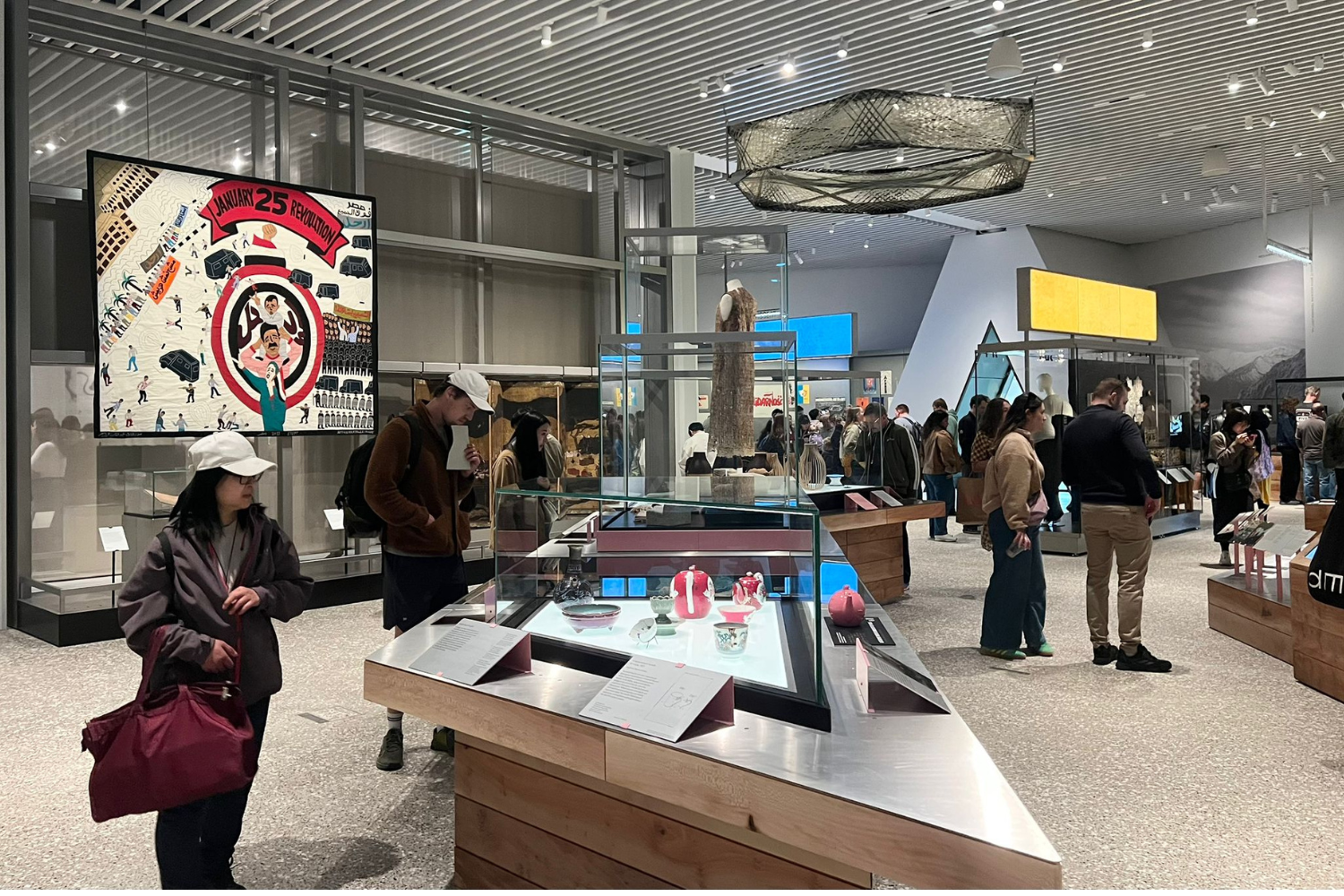
What is immediately clear is that V&A East has been designed with a wide range of audiences in mind. Labels are pitched accessibly without being patronising, offering enough context for a first-time visitor while giving detailed information to those with more knowledge. At the centre of each room, tables and panels offer activities for younger visitors to engage with the collection.
The temporary exhibition for the opening, ‘The Music is Black: A British Story’, traces 125 years of Black British music-making. It is a bold choice for an inaugural show and it signals what the museum seems to want to be: alive to the local community and the stories of East Londoners. And, there are deliberate choices about what has been put on the gallery walls. For example, a Rock Against Racism poster here, posters of Extinction Rebellion there, each placed in conversation by Tom Hunter, a British photographer, to show his experience of living in Hackney in the mid-80s.
On the top floor, a photographic exhibition looks back at what stood on the site before: fish smokers, carpenters, metalworkers, scrap yards, the texture of a working neighbourhood cleared between 2007 and 2011 to make way for the Olympic Park. It is a generous and self-aware gesture from an institution acknowledging the displacement its own existence required.
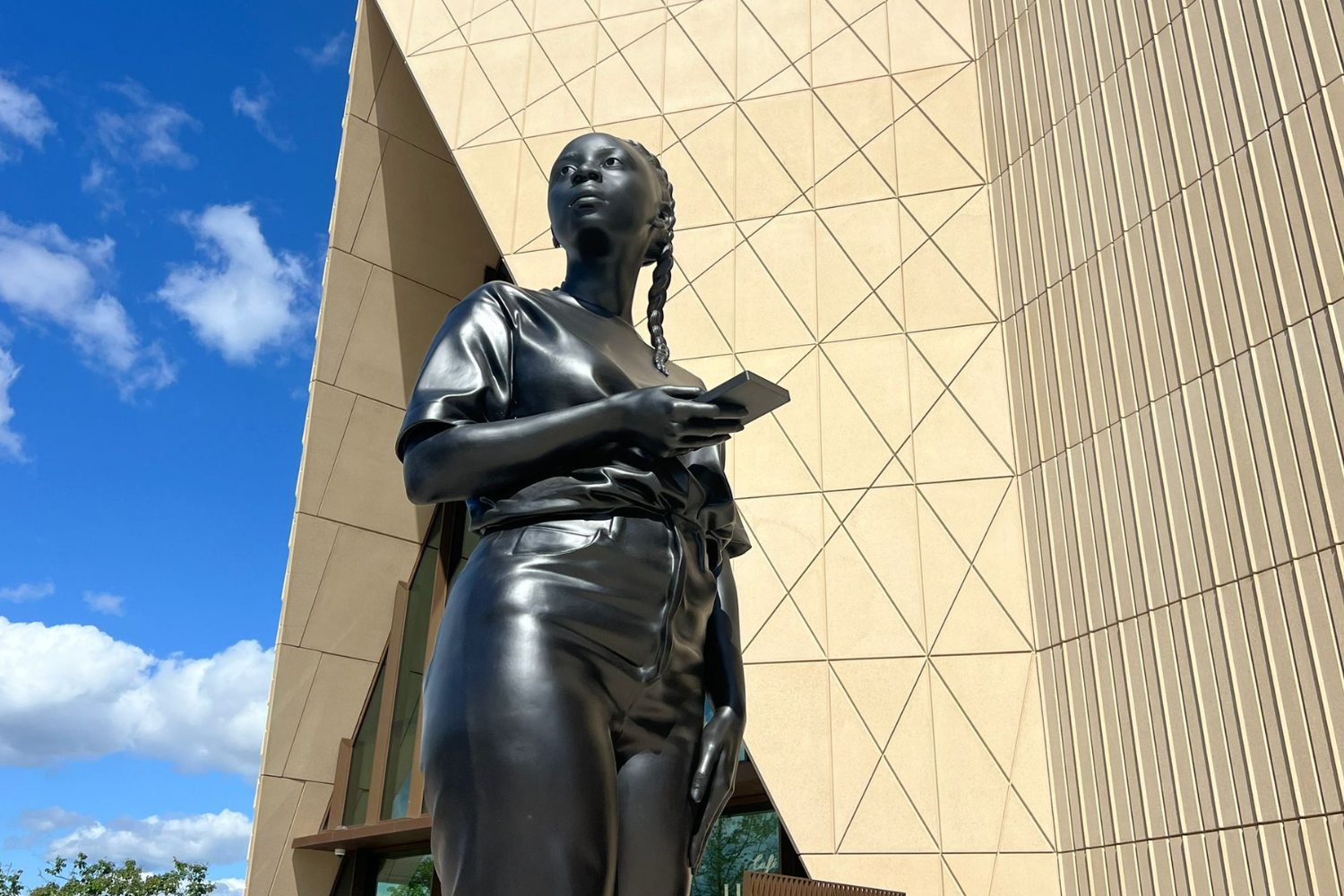
The museum has also commissioned new works from artists whose practices centre on identity, representation and belonging, such as Tania Bruguera, Carrie Mae Weems, Rene Matić, and Thomas J. Price. Price’s monumental bronze figure greets visitors at the entrance, placing a Black subject at heroic scale in a tradition that has rarely made room for one. Inside, Weems, Bruguera, and Matić each bring work that asks, in different registers and across different generations, who gets to be seen, who gets to speak, and who has historically been left out of institutions such as this one.
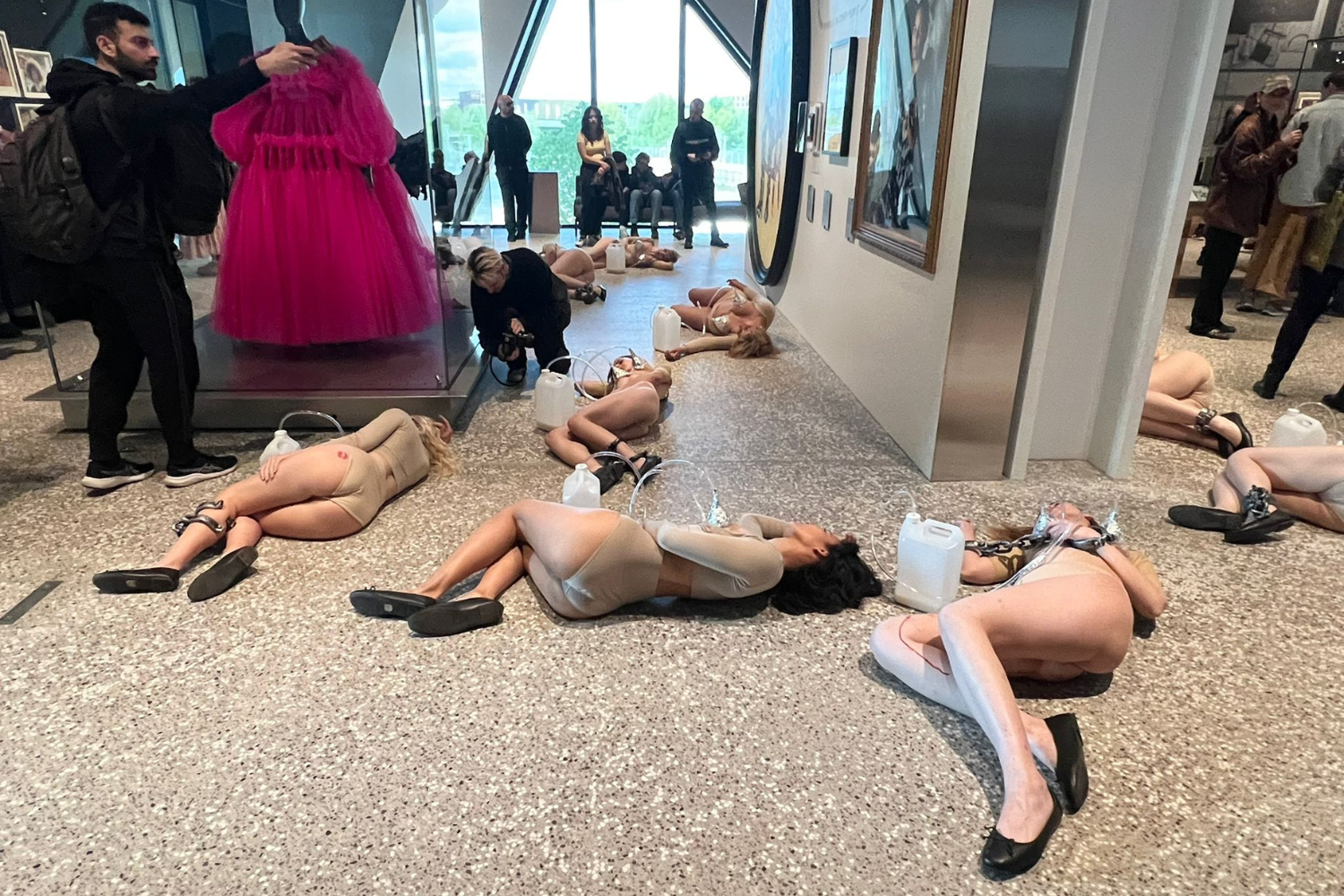
On opening day, that dialogue took an unexpected turn. On the ground floor, among the crowds of curious first-day visitors, a group of women appeared with props attached to their bodies, tubes connecting their breasts to gallons of milk, their poses combining the gestures of breastfeeding and milking, sprawled across the gallery floor. It was a performance by Speciesism, an activist group, under the banner ‘Milk is NOT Human(e)’. Whether this had been sanctioned by the museum or whether the activists had simply arrived to take advantage of the footfall was unclear. If V&A East is serious about opening its doors to the many voices of the community, it may find that some of those voices arrive uninvited, and that this, too, is part of what it means to be a museum without walls.
Ana Teles for London Art Walk
April 2026