
La Città è la Mostra: the parallel circuit of the 61st Venice Biennale
During the Biennale months, Venice transforms its 16th-century palazzos, baroque churches and industrial warehouses into art spaces, and the city itself becomes one vast, sprawling exhibition of contemporary art. Beyond the main show at the Giardini and the Arsenale, the eventi collaterali spread across historic venues that are often opening to the public for the very first time. The 61st edition, titled In Minor Keys and conceived by Koyo Kouoh, whose vision her team carried forward after her death, unfolds through a constellation of exhibitions attuned to memory, spirituality, displacement and the afterlives of colonialism. To experience the Biennale fully is to cross the lagoon by vaporetto to see the golden paintings of a German master, or to step inside a former customs house and come face to face with an installation by a Brazilian artist who has crossed continents on foot, often barefoot. The urgencies of the present reach well beyond the official pavilions of the 2026 Venice Biennale.
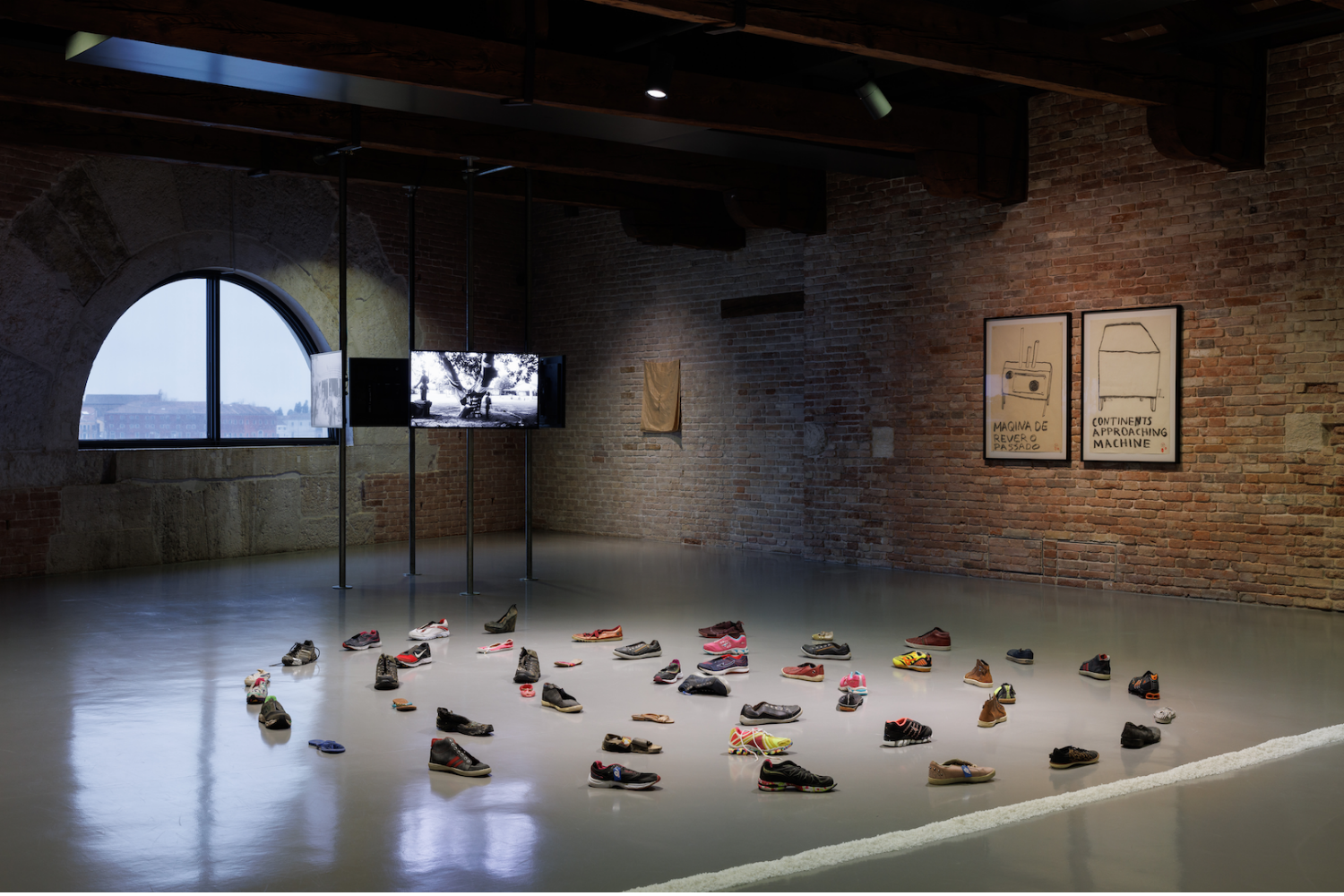
Paulo Nazareth. Algebra, Punta della Dogana (29 March – 22 November 2026)
Punta della Dogana is where Venice historically stopped, taxed and controlled the goods arriving by sea. It is precisely this dimension of control that Paulo Nazareth’s exhibition reactivates. Inside a building constructed to count and record possessions, “Algebra” exposes everything that colonial ledgers tried to erase. The title comes from the Arabic al-jabr: the resetting of broken bones. As a working method, Nazareth refuses official maps.
For years, he has retraced on foot the routes of forced migration across the Americas, the Caribbean and the African continent, almost always barefoot, turning his own skin into the logbook of those crossings. On the gallery floor, a continuous line of coarse salt slowly discloses the ghostly outline of a tumbeiro, a slave ship. In the exhibition curated by Fernanda Brenner, what we see is the trail of that walk of resistance: photographs, texts, and a pair of worn-out Havaianas share the space with the memory of the former customs house, making the sole the archive.
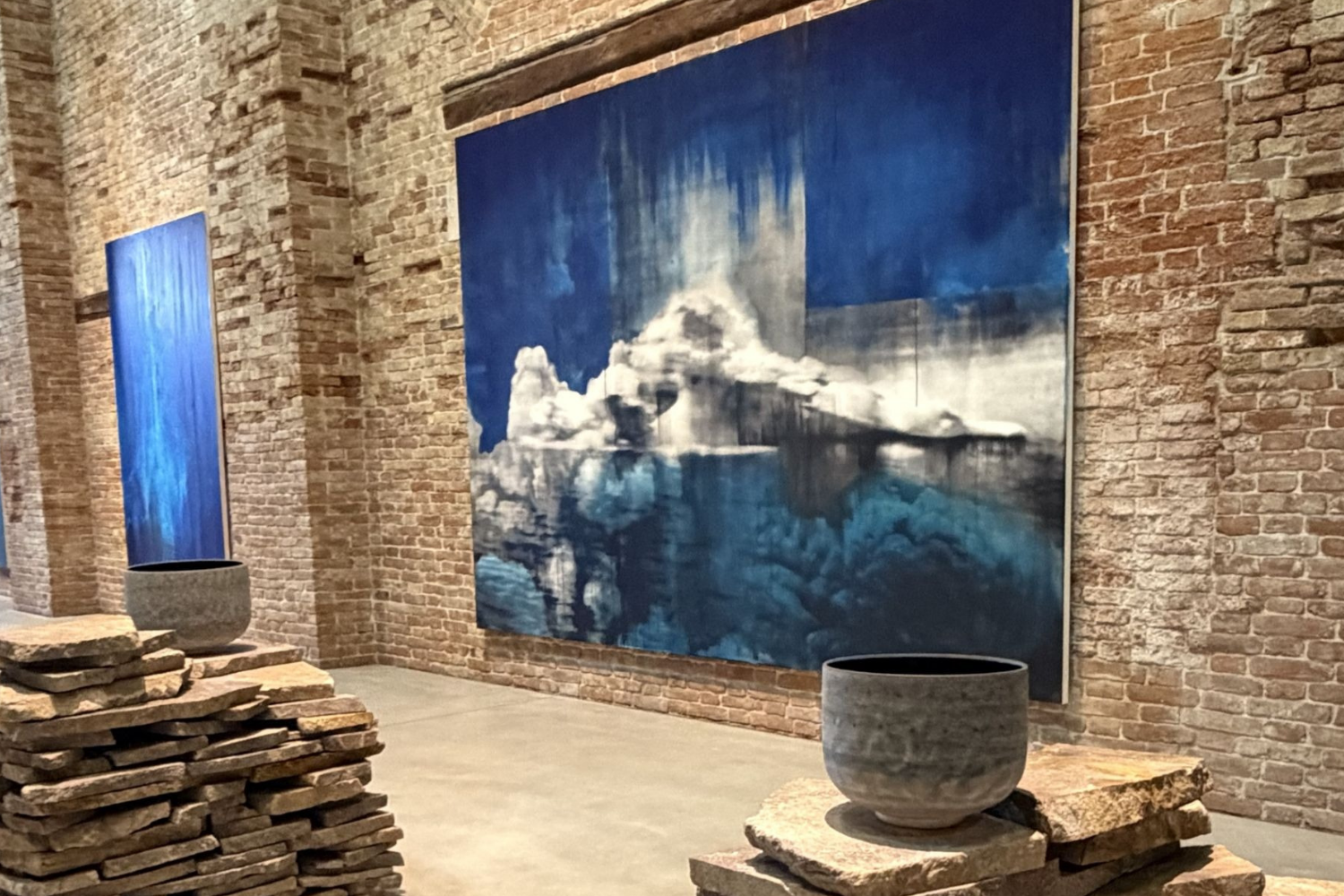
Lorna Simpson – Third Person, Punta della Dogana (29 March – 22 November 2026)
On the lower floor of the same building, Lorna Simpson presents her most significant European exhibition in over a decade, according to the preview. “Third Person” brings together fifty works, including paintings, collages, sculptures and video installations made across twenty years. The journey begins with figures caught in political and historical tension, then moves into arctic panoramas reconstructed from real expedition archives: vast canvases in blues and greys where black silhouettes inhabit frozen landscapes on the edge of disappearance. On the floor, blocks resembling fragments of ice support sculptures, making the space feel as unstable as the memories the artist is probing. The exhibition asks what gets erased, what gets distorted, and what survives in spite of everything. What surprises is not only the works themselves, but the way they exist in space and how that space, a former customs house built on centuries of trade and erasure, quietly answers back.
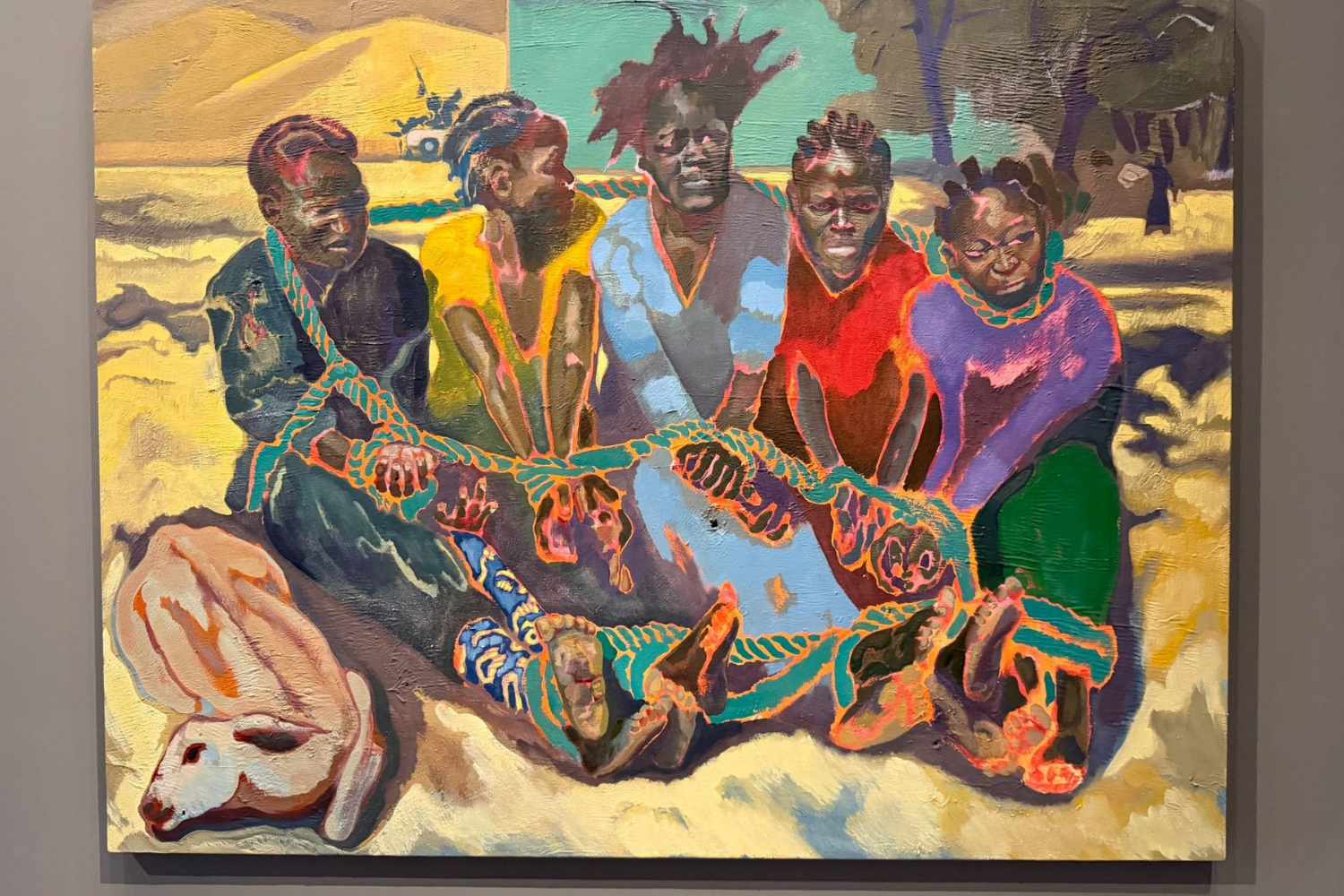
Michael Armitage.The Promise of Change, Palazzo Grassi (29 March 2026 – 10 January 2027)
Palazzo Grassi is one of the most imposing neoclassical buildings on the Grand Canal, and it is there that the Pinault Collection has installed the most comprehensive retrospective ever dedicated to Michael Armitage. Forty-five large paintings and over a hundred studies spread across two floors trace a decade of work, revealing the painter’s fascination with art history and mythology and his movement between the documentary and the dreamlike. Born in Nairobi in 1984, Armitage addresses sociopolitical tensions, violence, displacement and the legacies of colonialism in paintings made, among other supports, on lubugo, a bark cloth traditionally used in funerary rituals in Uganda, whose natural irregularities break with the conventions of Western painting.
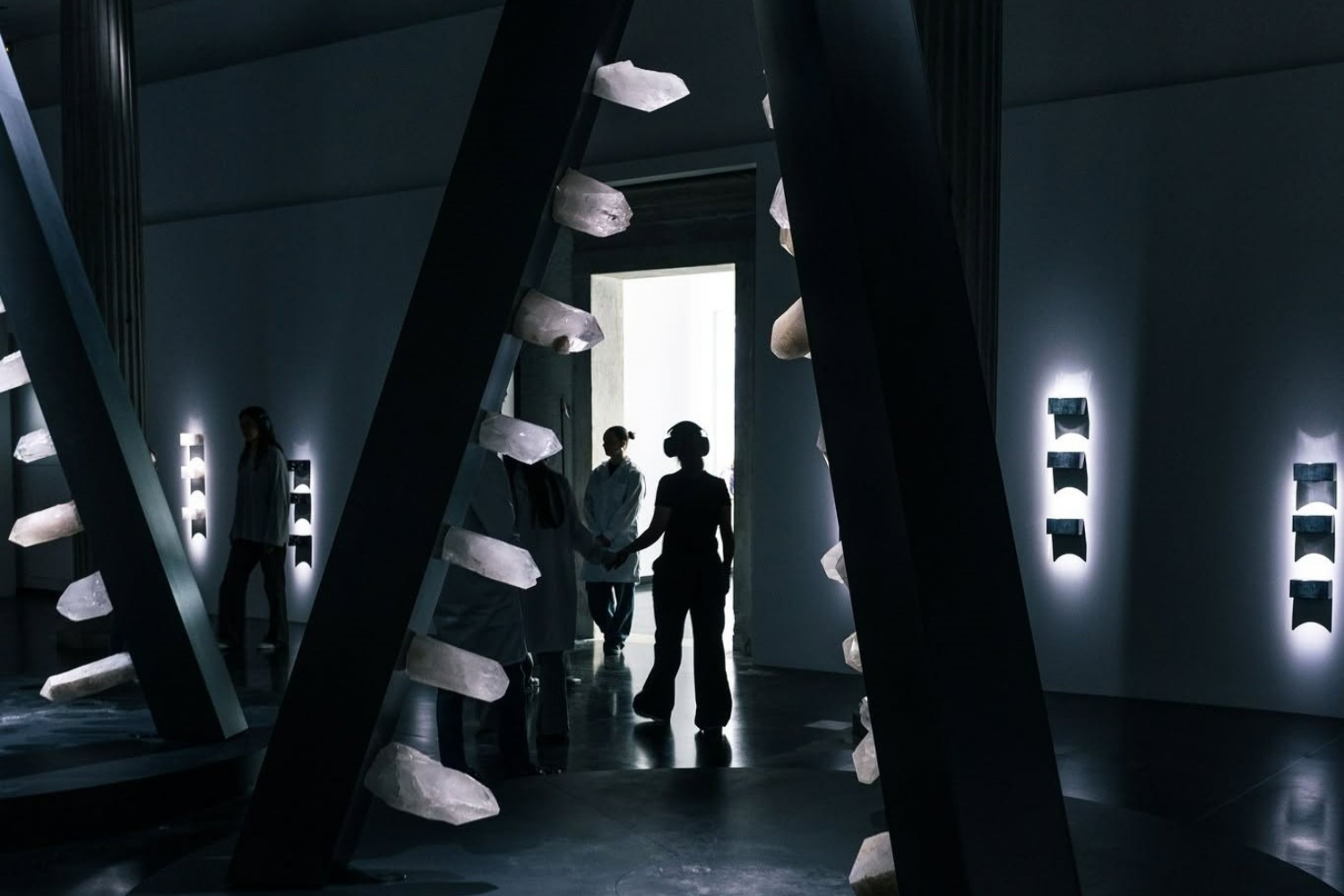
Marina Abramović. Transforming Energy, Gallerie dell’Accademia (until November 2026)
The walls of the Gallerie dell’Accademia have historically been reserved for the tradition and rigour of names such as Titian, Giorgione and Leonardo da Vinci. The arrival of Marina Abramović breaks that historical monopoly: she is the first living woman to receive a solo exhibition at the institution, bringing the body and performance into a space shaped by the painters of the past. In “Transforming Energy”, the pioneer of performance art invites the public to directly activate her transitory objects, interactive structures incorporating minerals and crystals that seek to connect human anatomy to the energy of the earth. Filling century-old rooms with energetic and ephemeral practices, the exhibition coincides with the celebrations of her eightieth birthday and marks a triumphant return to the city where, in 1997, she was awarded the Golden Lion.
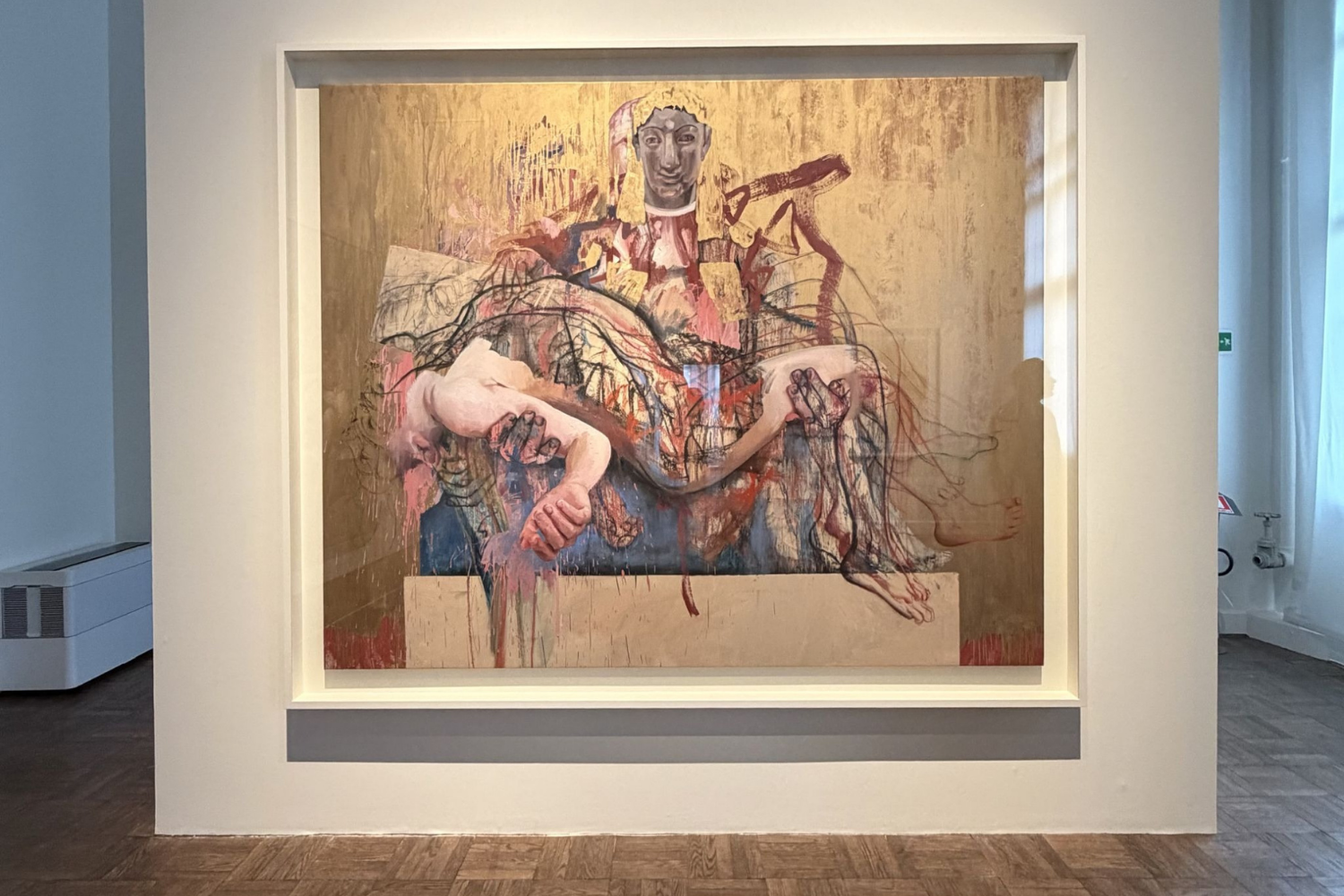
Jenny Saville, Ca’ Pesaro, Galleria Internazionale d’Arte Moderna (28 March – 22 November 2026)
Jenny Saville presents her first major exhibition in Venice with over 30 works, paintings and drawings, spanning from the 1990s to the present. A member of the Young British Artists generation, Saville built her career by revitalising figurative painting with monumental canvases of the human body. “I’m a painterly painter,” she told The Art Newspaper in 2025. Layers of oil paint that become flesh, folds and skin. Ca’ Pesaro, a 17th-century baroque palazzo on the Grand Canal, is the ideal setting: Saville’s canvases enter into dialogue with the great painters of Venice’s past. In her most recent works, the artist turns to war and collective grief: a series of Pietàs drawn from images of real conflicts, including Aleppo, transforms specific suffering into something universal.
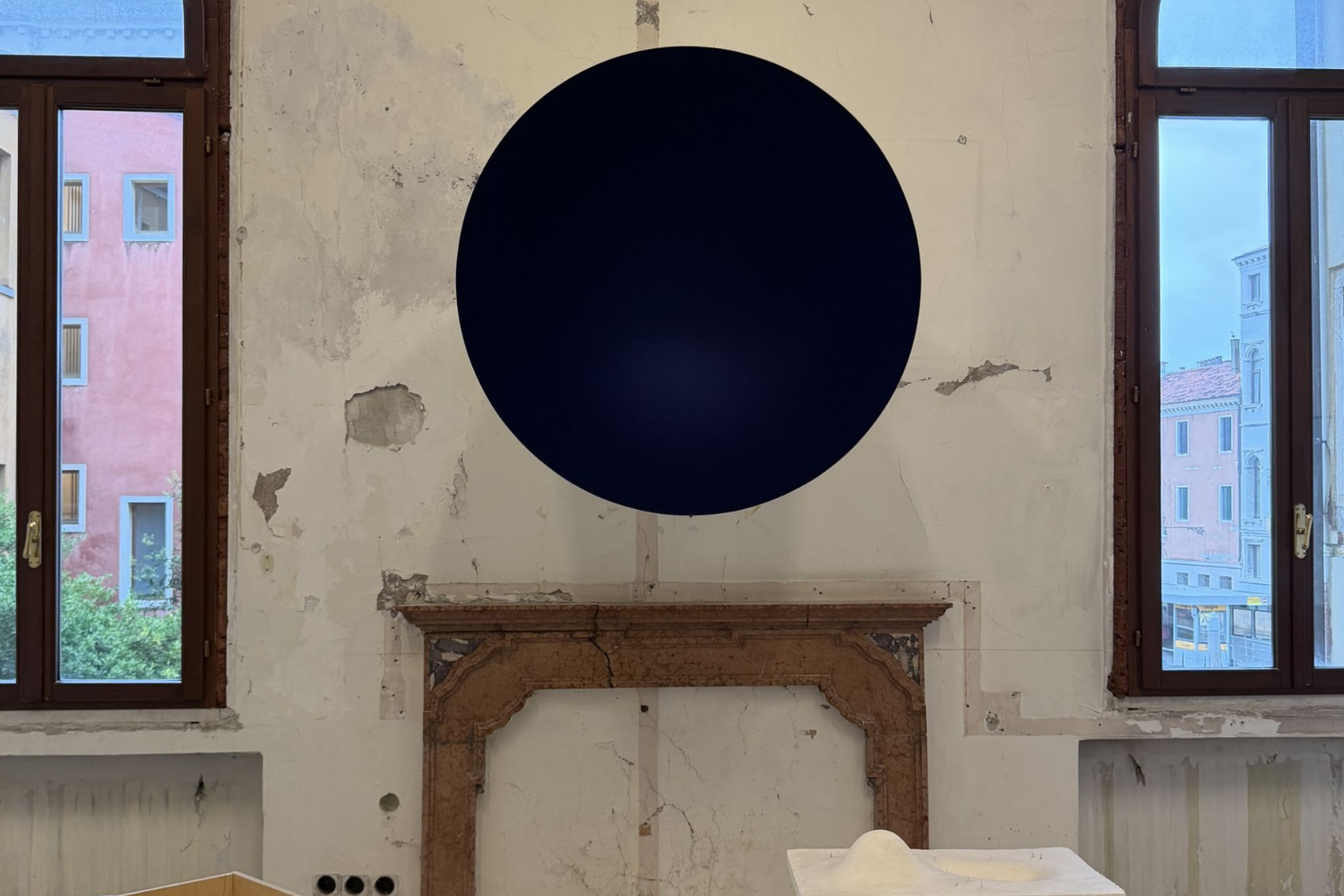
Anish Kapoor, Palazzo Manfrin, Cannaregio (6 May – 8 August 2026)
Few artists divide opinion quite like Anish Kapoor, and his exhibition at Palazzo Manfrin has become one of the most discussed events orbiting the Biennale. The 16th-century palazzo in Cannaregio brings together around 100 architectural models spanning five decades of realised and unrealised projects, alongside monumental installations and stainless-steel works. At the core of the exhibition is Kapoor’s enduring confrontation with void, perception and spatial disorientation. “Descent into Limbo” returns to Venice, its blackened void dissolving the boundary between surface and abyss, while a monumental new version of “At the Edge of the World” hangs suspended from the ceiling. The exhibition also includes immersive environments of silicone and paint, as well as works employing ultra-black pigments related to Vantablack, pushing sculpture toward the threshold between object and absence.
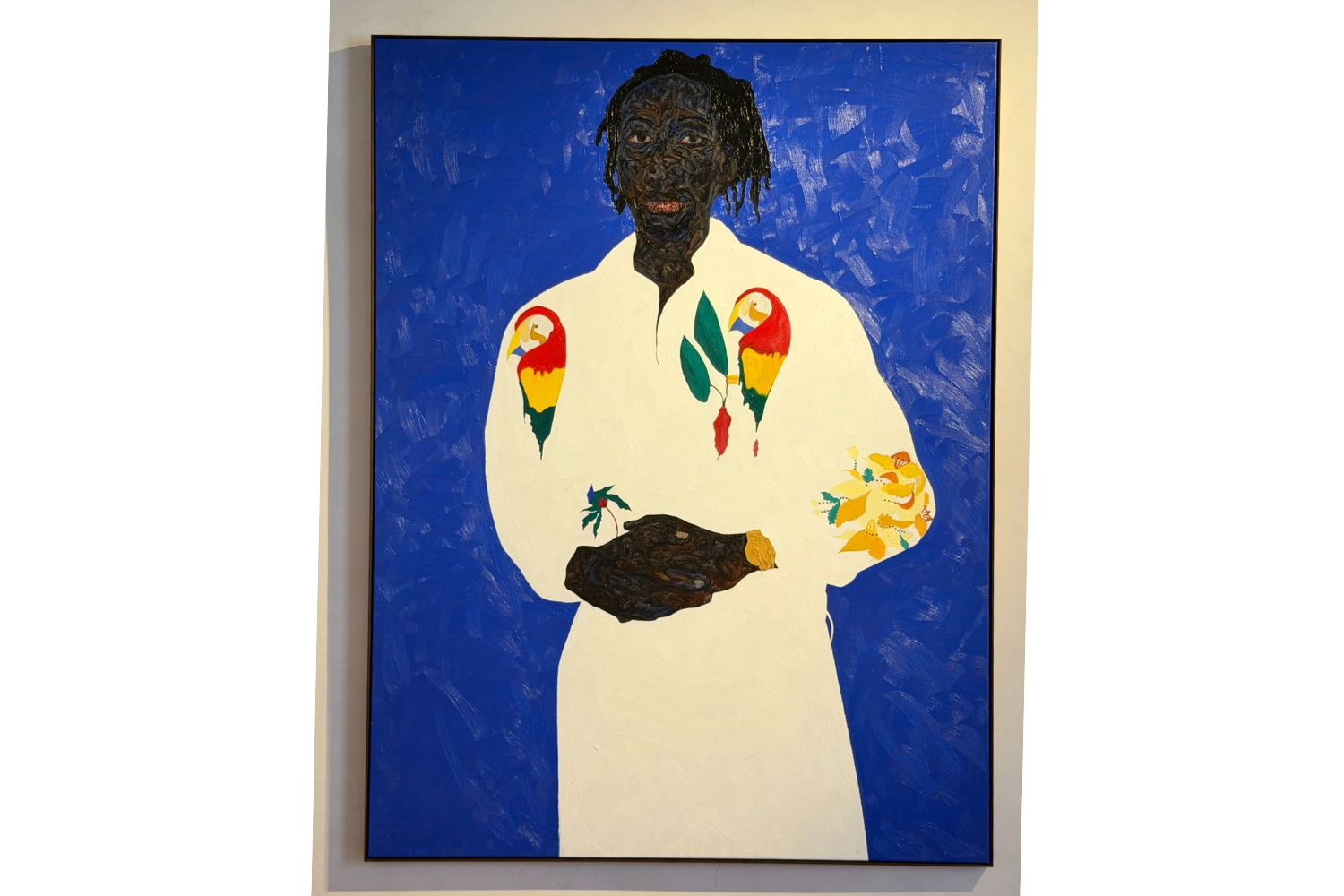
Amoako Boafo. It Doesn’t Have to Always Make Sense, Museo di Palazzo Grimani (6 May – 22 November 2026)
The Museo di Palazzo Grimani, in Santa Maria Formosa, was built in the Middle Ages and transformed in the 16th century by the heirs of Antonio Grimani, Doge of Venice from 1521 to 1523. It is in this palazzo, marked by rare Tuscan-Roman Renaissance influences within Venice, that Boafo presents his first solo exhibition in Italy, titled “It Doesn’t Have to Always Make Sense”. Born in Accra in 1984, Boafo paints with his fingers, with no mediation between hand and canvas, and focuses his work exclusively on Black subjects, restoring to them centrality, dignity and complexity. Installed across the second floor, the paintings respond to the architecture’s scale and ornamentation, creating moments of friction as well as alignment between past and present.
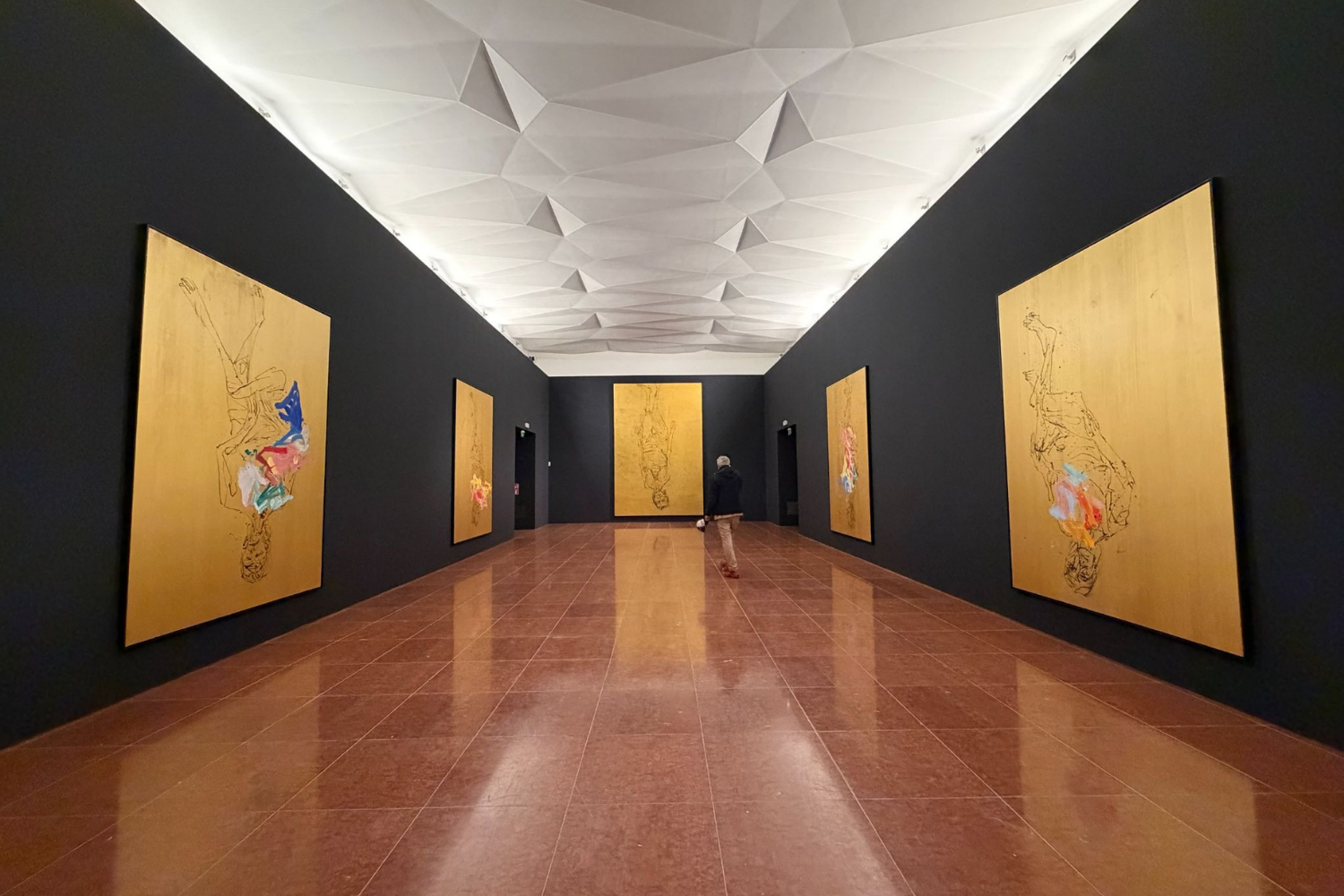
Georg Baselitz. Eroi d’Oro, Fondazione Giorgio Cini, Island of San Giorgio Maggiore (6 May – 27 September 2026)
The German painter Georg Baselitz died on 30 April 2026, aged 88, just days before the opening of Eroi d’Oro at the Fondazione Giorgio Cini. Born in 1938 in East Germany, he grew up under Nazism and the Soviet regime, a context that professor Luiz Armando Bagolin sums up in a single line: Baselitz was born “into a destroyed order, a destroyed landscape, a destroyed people, a destroyed society.” It is from that origin that the Helden emerge, the exhausted heroes of the 1960s, and the 1969 decision to paint everything upside down,not as formal play, but as a refusal of any narrative that still pretended to be standing. In “Eroi d’Oro”, his final series, Baselitz and his wife Elke alternate as suspended figures against gold grounds in thin lines of diluted black paint, evoking both the Byzantine icon and the calligraphy of Hokusai. The exhibition is at the Fondazione Giorgio Cini, a former monastic complex on the island of San Giorgio Maggiore, reachable only by vaporetto, with a direct view across the water to Piazza San Marco.
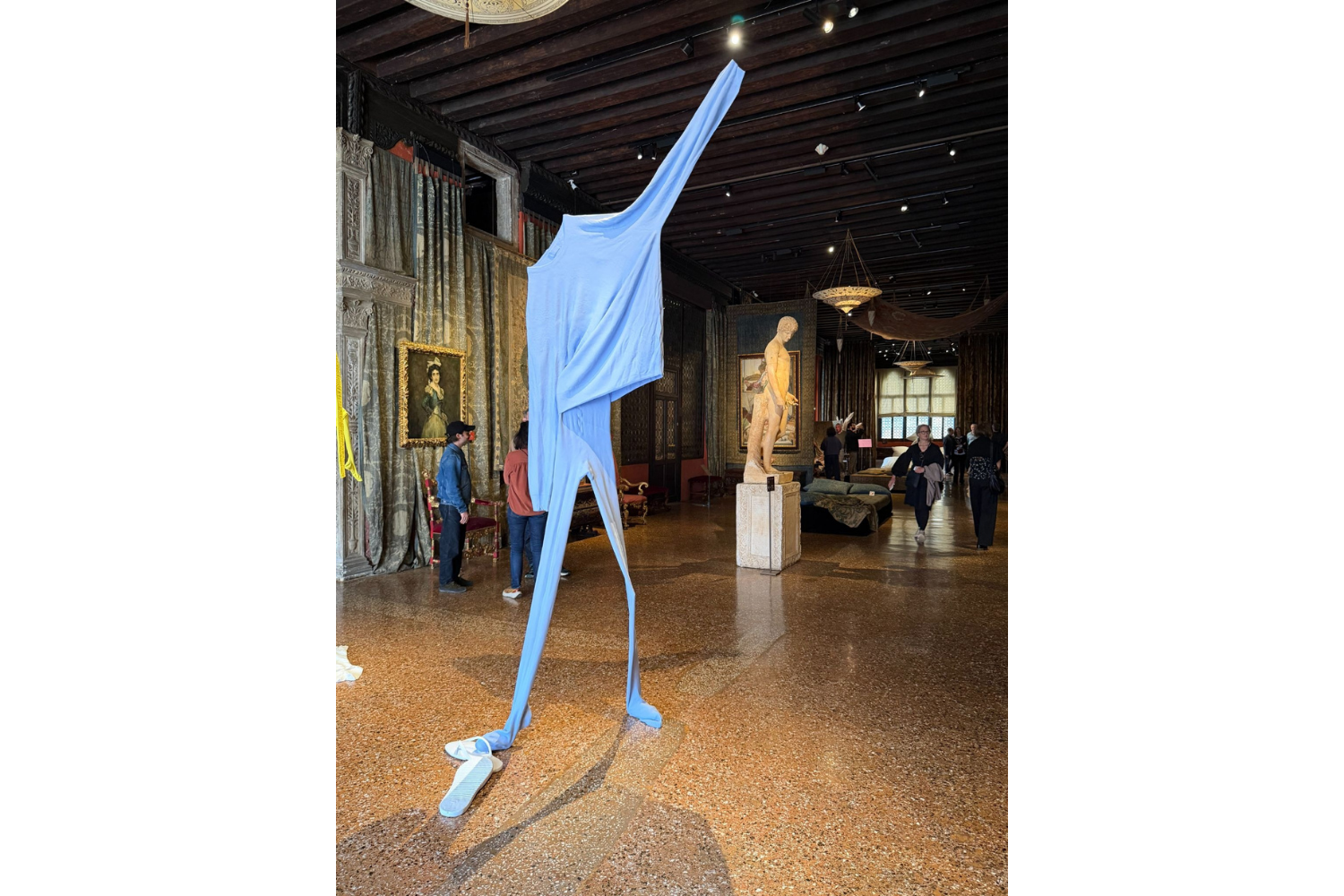
Erwin Wurm. Dreamers, Museo Fortuny (6 May – 22 November 2026)
Erwin Wurm’s first major monographic exhibition in Italy takes over the Museo Fortuny, filling the 15th-century Venetian Gothic palazzo with a practice that completely rejects sculpture as a fixed object. For Wurm, the medium is found in the gesture, the ordinary, and the body. His iconic One Minute Sculptures invite visitors to follow deadpan instructions, holding a pose for sixty seconds with a chair, a bottle, or a jumper. The artwork exists strictly within that fleeting moment; what remains is just the photograph. While humour serves as the surface hook, the underlying questions are sharp: how we navigate the body, how capitalism commodifies it, and what is left when the performance stops. This dialogue with Mariano Fortuny’s legacy becomes physical in the pairing of the Spanish designer’s Knossos shawl with Wurm’s textile sculpture “Yikes”, two pieces of fabric that remain inanimate rectangles until a living body activates them.
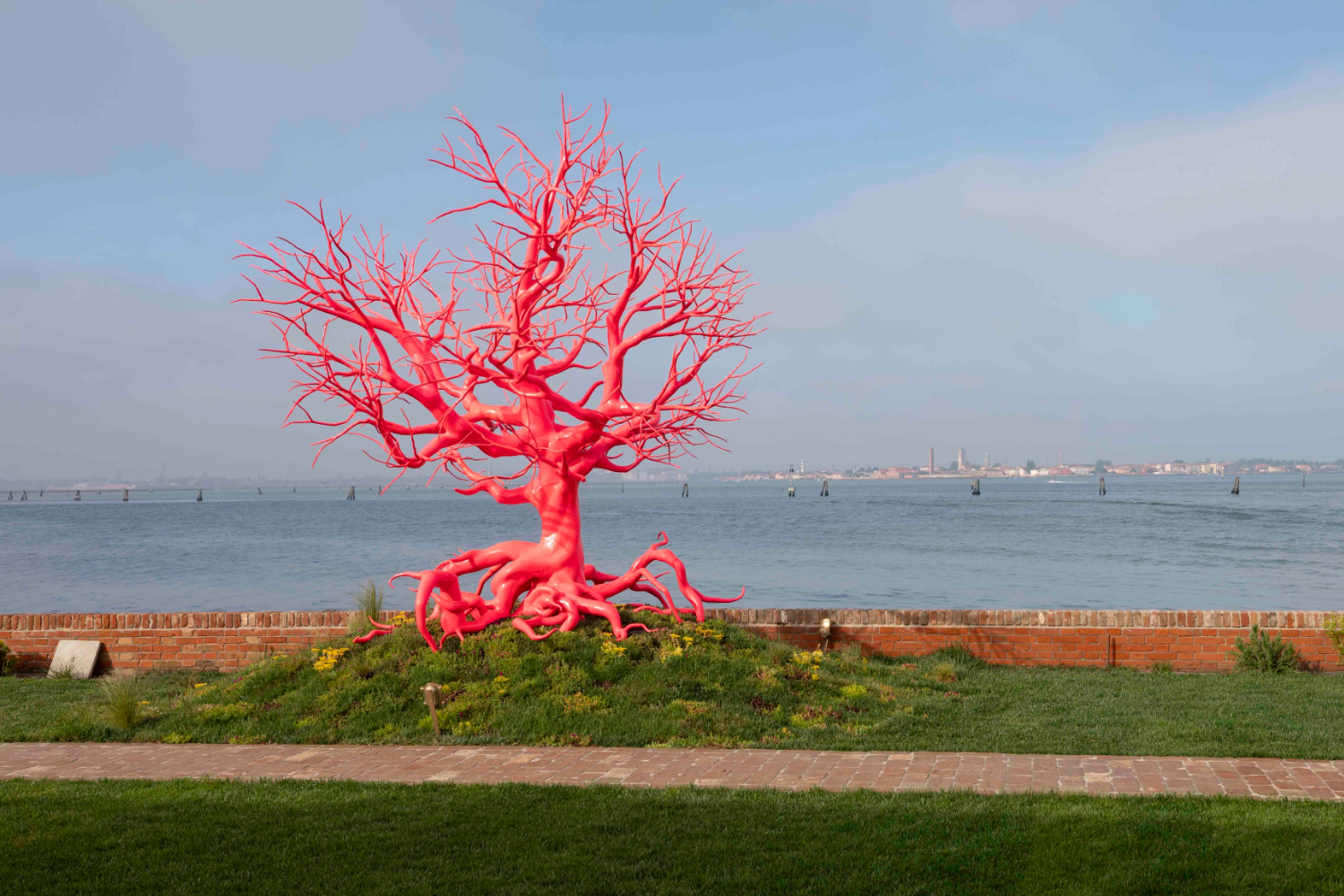
Fondazione Sandretto Re Rebaudengo – Island of San Giacomo, Northern Lagoon
One highlight that deserves a mention beyond the main venues: the Island of San Giacomo, in the Northern Lagoon between Murano and Burano, opened on 7 May 2026 as the third home of the Fondazione Sandretto Re Rebaudengo. Once a monastery, then a Napoleonic military garrison, the site had fallen into abandonment when it was acquired in 2018 and has since been restored as a space where contemporary art and environmental sustainability go hand in hand. Three exhibitions occupy the spaces of the former Polveriera — among them a solo show by Matt Copson, curated by Hans Ulrich Obrist, and the group exhibition Don’t have hope, be hope!, featuring works from the Sandretto Re Rebaudengo collection by artists including Michael Armitage, Lucas Arruda, Matthew Barney and Anish Kapoor. Six permanent installations are spread across the garden. The island is opening to the public gradually, with visits available by prior booking through the foundation’s official channels.
The 61st Venice Biennale spills beyond its official programme and spreads across the city. Palaces, churches, and islands become stages for artists, established and emerging, over the course of several months. What makes this edition stand out is its range: Georg Baselitz’s final series shown days after his death, Marina Abramović’s first solo exhibition at the Accademia, Jenny Saville’s first major exhibition in Venice. Alongside them are artists presenting work here for the first time, or at a scale they have never attempted before.
The work is urgent: displacement, colonial memory, grief, the body under pressure. What distinguishes this edition is the way the parallel exhibitions expand the Biennale itself rather than merely exist beside it.
Marilia Lopes for London Art Walk
May 2026