
Inhotim in 2026: New works and a season of celebration
When we wrote about Inhotim earlier this year, the museum’s 20th-anniversary programme was still largely a promise. Now, we have news. Between February and April, Inhotim opened three new exhibitions and two site-specific works, confirming what the season’s curatorial direction suggested: this anniversary would not be a retrospective exercise in self-congratulation, but a statement on the place of contemporary Brazilian art today. Anyone with the opportunity to visit Inhotim this year will be surprised by the vast programme and unprecedented events.
Three inaugurations
In April, the museum launched the core of its 2026 programme with three simultaneous openings. Each one marks a debut at Inhotim and brings fundamental themes such as memory, processes of historical reparation, and displacement, as well as the relationships between body, nature, and space.
More than 100 works span almost three decades of the artist Dalton Paula’s career in “Dupla Cura” at the Mata Gallery. Curated by Beatriz Lemos, this is the first retrospective of Paula’s work. Born in Brasília and based in Goiânia, he founded the Sertão Negro Art Studio and School in 2021 alongside professor Ceiça Ferreira, a quilombo-school dedicated to artistic training and the valuation of Afro-Brazilian knowledge in dialogue with the Cerrado region.
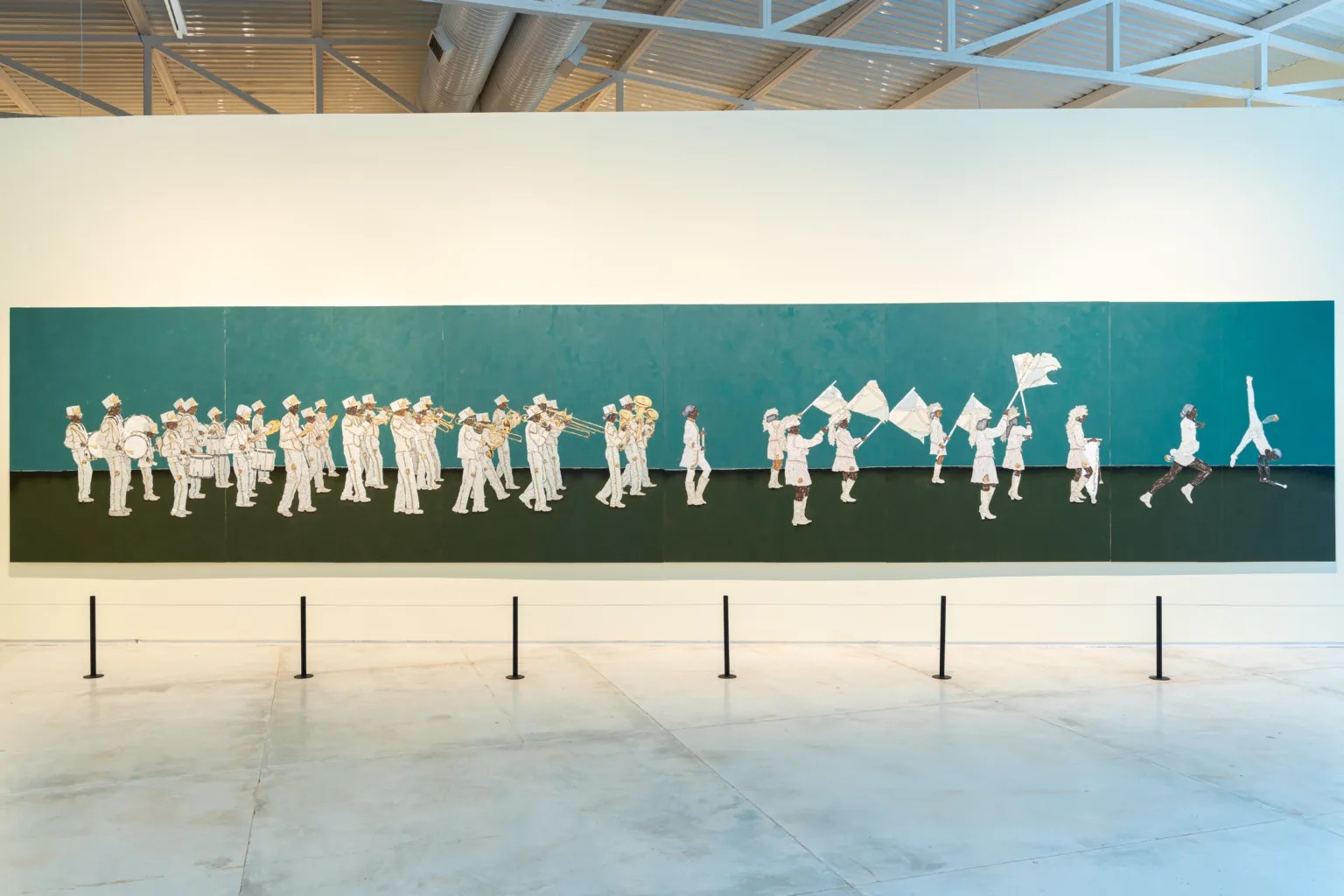
Upon entering the exhibition, visitors are welcomed by the monumental work “Fanfarra”, which is part of the Black Childhoods series. The presence of children as a symbol of celebration, protection, and renewal echoes one of the central axes of the exhibition, the title of which refers to Afro-religious entities linked to childhood, such as the Ibejis and the saints Cosme and Damião. From this reference, Dupla Cura proposes a reflection on the inseparable relationship between individual healing and collective well-being. Throughout his career, Dalton Paula has investigated the erasure and reconstruction of Black history in Brazil, mobilising beliefs and ancestral knowledge. In Inhotim, the exhibition transcends the limits of the gallery, extending through the museum’s gardens and into educational actions carried out in dialogue with quilombola communities in the Brumadinho region.
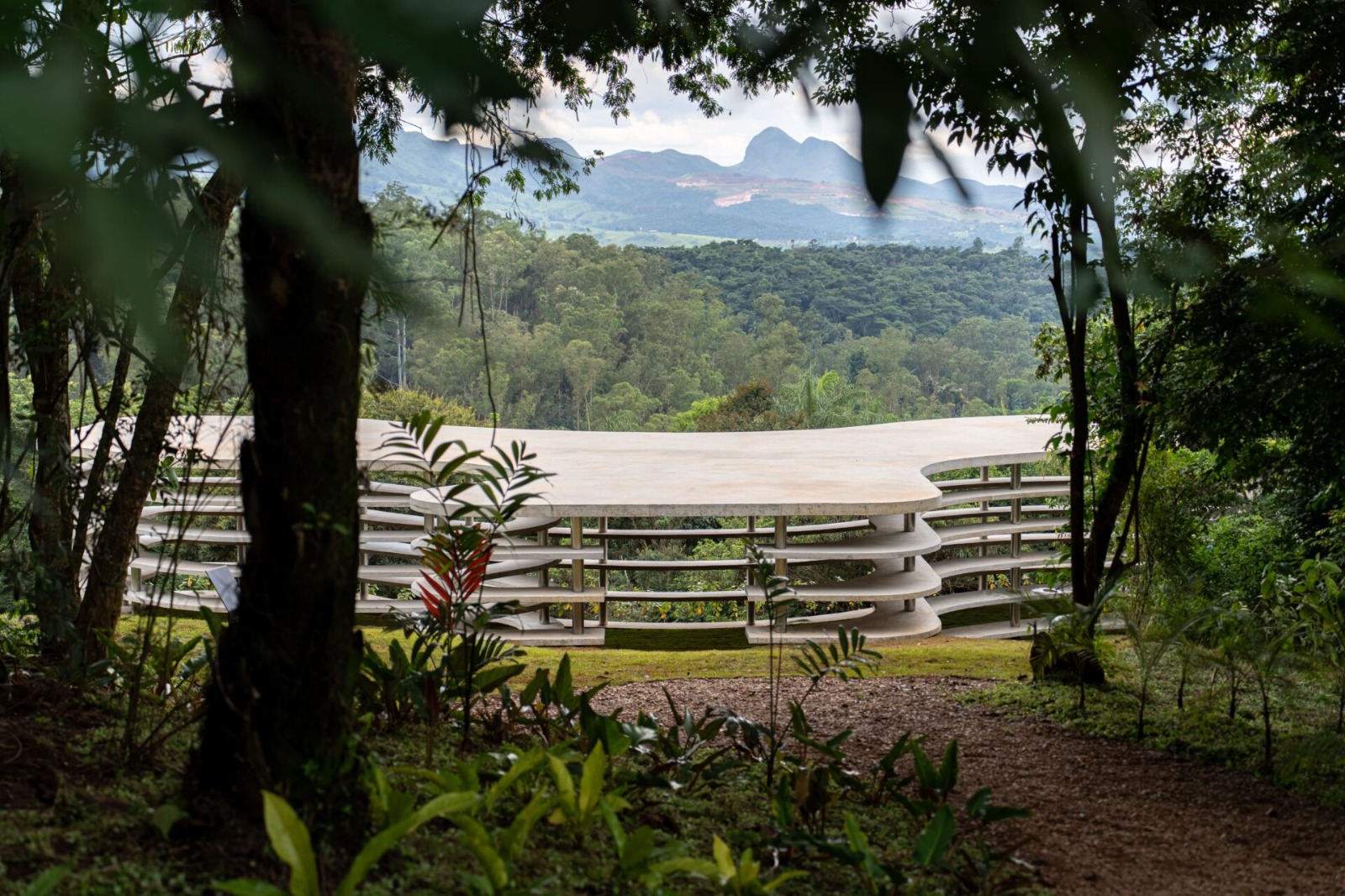
Another major highlight is the site-specific work “Contraplano” by Laís Myrrha, presented entirely outdoors. The sculpture occupies one of the highest points of the park, in an area of approximately 250 square metres. Embedded directly into the landscape, the work proposes a reflection on the relationship between the visible and the invisible and was conceived as a permanent installation. In the artist’s words, it refers to the “Ninhos” and “Penetráveis” of Hélio Oiticica, configuring itself as a physical experience. At the same time, it presents an ambiguity between a critique of the modernist idea of progress and a homage to the democratic character of Oscar Niemeyer’s marquees, especially their capacity to produce spaces that regulate light and shadow, alongside the idea of permanence in collective spaces. The work also articulates the landscape marked by mining and modern Brazilian architecture, bringing together structures of excavation and construction, making shadow a central device for reading and experiencing the space.
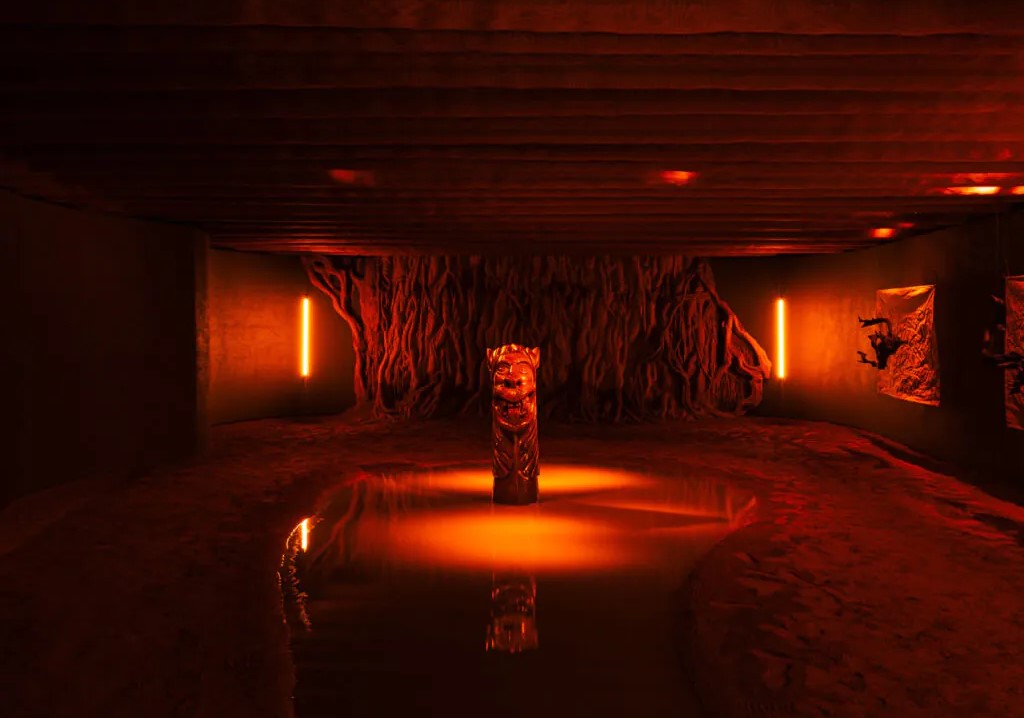
The third opening in April occupies the Nascente Gallery, a particularly inspired curatorial choice, as the building itself, constructed around a natural spring, dialogues intrinsically with the work of davi de jesus do nascimento. Originally from the north of Minas Gerais, the artist defines himself as a “barranqueiro” (river dweller), having grown up on the banks of the São Francisco River. His installation “Tororoma” (2026) now joins Inhotim’s permanent collection, intertwining matter and memory in a space that is, simultaneously, landscape and a living archive of the riverbanks. With a set of three paintings, a video captured in the Peruaçu Caves National Park, and unprecedented figureheads produced by Mestre Expedito, the installation establishes flows between ancestry, labour, and the affective geography of the Velho Chico. Rooted in locations such as Ilha do Ferro and Piranhas, the work invites the public to a necessary sense of estrangement, presenting a set of symbolic relationships that, for most visitors, reveals itself as a first contact with the human scale and the political complexity of the margins of the São Francisco River.
The choice of these three artists, invited to develop original works for Inhotim, reflects the institution’s vocation, as highlighted by artistic director Júlia Rebouças, to amplify singular trajectories while engaging directly with some of the most urgent contemporary issues.
As we covered in February, the commemorative year began on the 7th of February with two important activations that set the tone for the 2026 programme. Grada Kilomba presented “O Barco – Ato III”, the final chapter of a project initiated at Inhotim in 2024, when her monumental 32-metre installation composed of 134 blocks of burnt wood began to occupy the Galpão Gallery. Over three acts, the artist transformed the work into a living space of performance, poetry, and memory. In this stage, Kilomba incorporates “Opera to a Black Venus” and “Compressed Time”. In the video installation, the artist imagines an emptied ocean, the bottom of which reveals the hidden layers of human history, transforming the sea into an archive of lives lost to slavery, colonialism, war, and forced migration. The presence of a Black Venus as a mediating figure of memory and resistance expands one of the artist’s central investigations: how to narrate historical trauma and create other possibilities for the future.
Simultaneously, Paulo Nazareth presented “Esconjuro – Verão”, the final stage of a series that articulates spirituality, territory, and Afro-Brazilian ancestry. The two activations by Kilomba and Nazareth conclude long-term cycles developed in dialogue with Inhotim, giving the start of the anniversary year a sense of closure and, simultaneously, renewal.
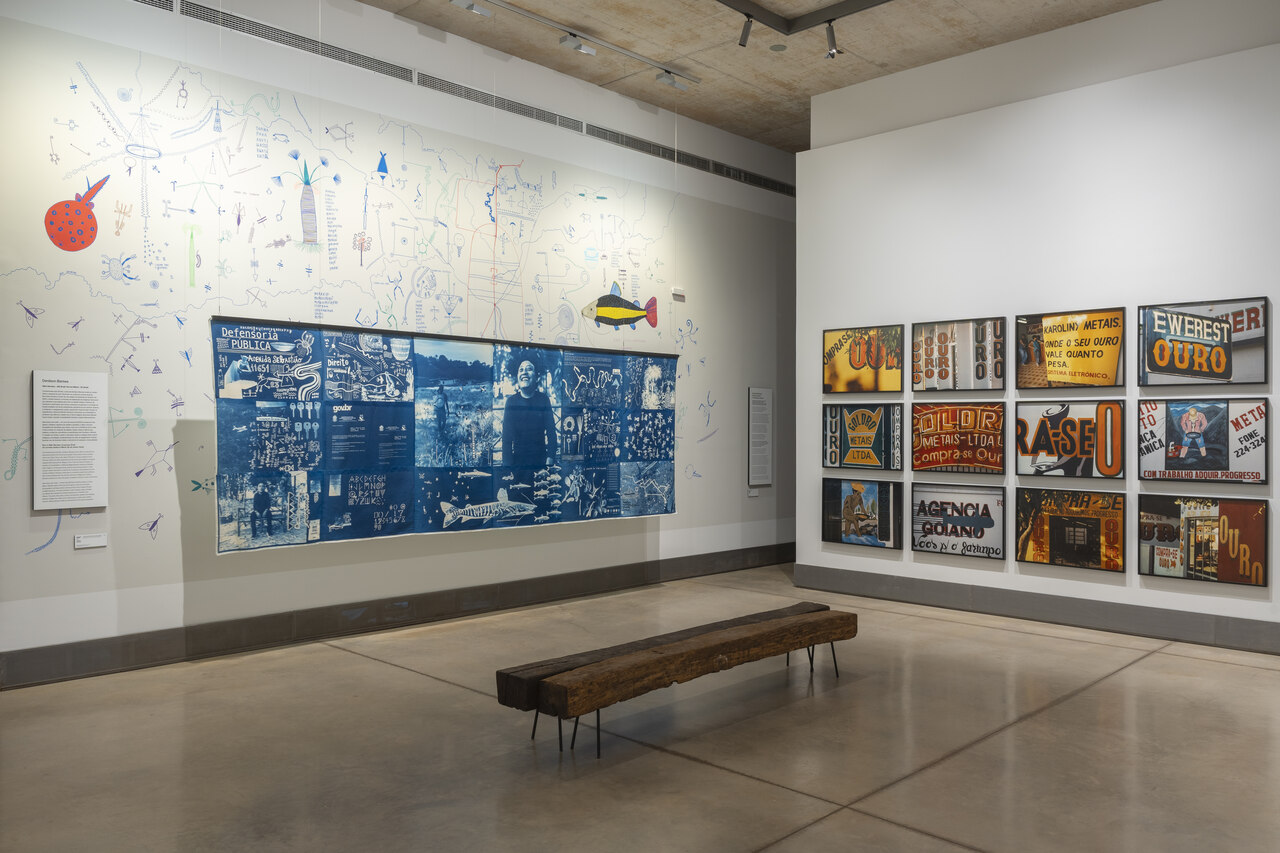
In addition to this commemorative programme, other exhibitions currently on display are worth noting. One of these occupies the gallery that celebrated ten years of existence last year. Previously dedicated to the work of Claudia Andujar, it now expands the dialogue and also hosts works by contemporary Indigenous artists from Latin America that enter into conversation with Andujar’s photographs. The long-term exhibition is titled “Maxita Yano”, an expression meaning “earth house” in the Yanomami language, which has also been integrated into the gallery’s name, now known as the Claudia Andujar | Maxita Yano Gallery. Bringing together works by 22 Indigenous artists from South America, the exhibition demonstrates how art can be, in the words of curator Beatriz Lemos, a strategy of struggle.
In the Fonte Gallery, the Swiss artist Pipilotti Rist presents “Homo sapiens sapiens”, an immersive installation filmed in the museum’s own gardens in 2004 and exhibited there for the first time. The video occupies the ceiling of the gallery, whilst the public lies down to watch, an experience that proposes to celebrate the body, nature, and the sensory dimension of the world. In the Lago Gallery, the Guatemalan artist Edgar Calel signs “Ru Jub’ulik Achik’ – Aromas of a dream”, his first major solo exhibition in Brazil: with 15 works, mostly commissioned, the Kaqchikel-Maya artist transforms the space with soil, stones, leaves, and wood, creating a sensory and spiritual bridge between San Juan Comalapa and the reliefs of Minas Gerais.
Also currently on display at Inhotim, two works commissioned by the museum itself expand the dialogue between art, nature, and territory. In the Marcenaria Gallery, “Giro” (2023) by Luana Vitra brings together ceramic vases, stones from the gardens, and copper pieces to investigate the ascent of matter: a poetic reflection on the mineral landscapes of Minas Gerais that stems from the affective memory of the artist’s father’s trade as a lathe operator. Meanwhile, on the lake near the Mata Gallery, “Apenas depois da chuva” (2024) by Rebeca Carapiá emerges from the water’s surface with 20 twisted iron sculptures, each five metres tall, designed from the artist’s immersion in the Serra da Capivara, in Piauí. It is a work that unites the geological memory of the sertão with the experience of growing up in the Cidade Baixa of Salvador, a territory marked by floods.
What comes next: the second half of the year
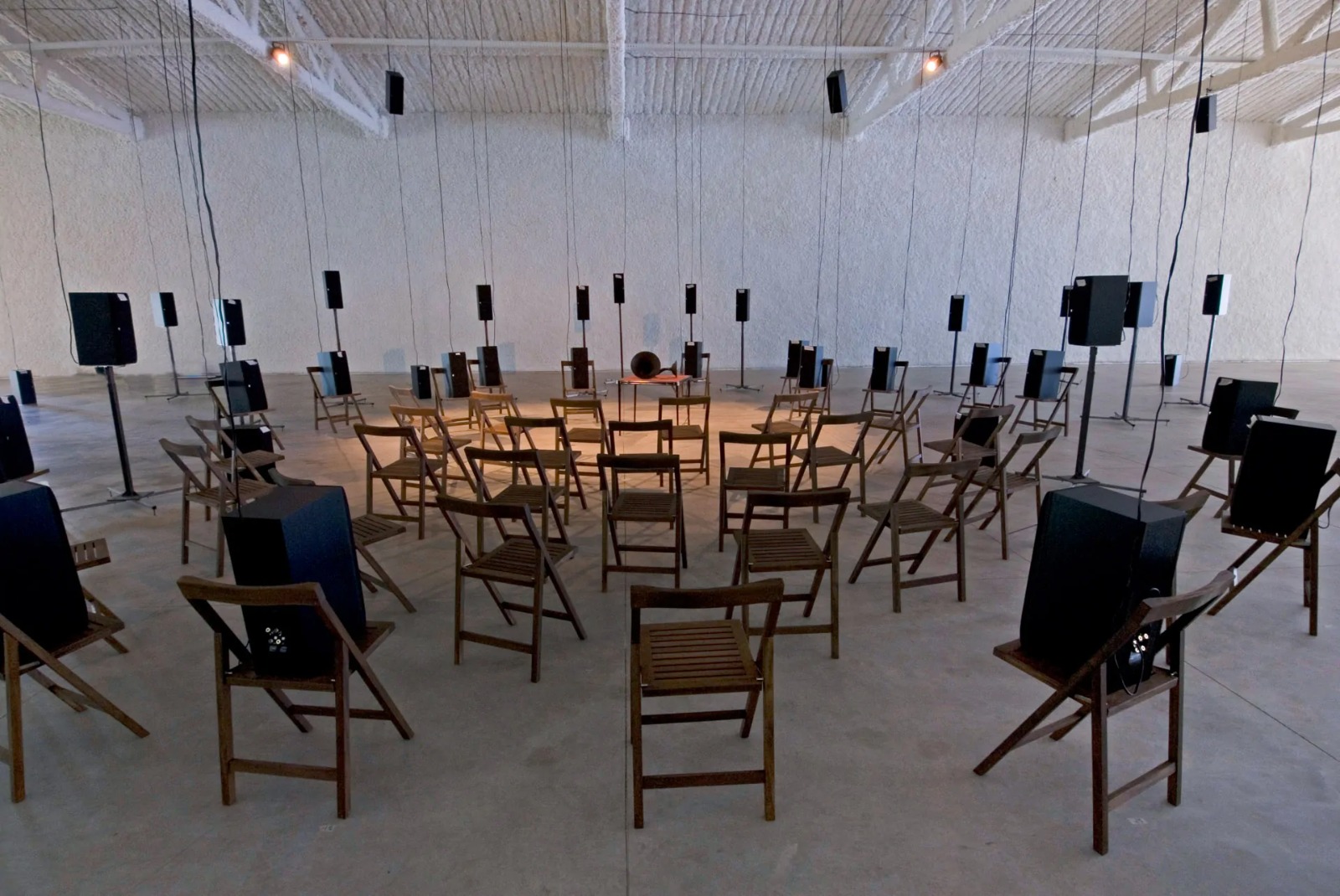
The programme remains intense until the end of the year. In September, the Burle Marx Education and Culture Centre will host a commemorative exhibition that revisits the institute’s history through documents from its archive. October brings two milestones: the Cildo Meireles Gallery reopens in an expanded form, incorporating “Missão/Missões (Como Construir Catedrais)” (1987), an installation featuring bones, coins, and communion wafers that reflects on faith, power, and colonial violence, alongside the already consecrated collection of the artist’s works on permanent display. In the same month, “The Murder of Crows” (2008) by Janet Cardiff and George Bures Miller returns to the museum after years of absence: 98 loudspeakers that intertwine birdsong, industrial noises, and voices into a single, disturbing soundscape.
The year 2026 at Inhotim is not merely a celebration of its 20th anniversary, but a declaration of intent. The programme brings together some of the most urgent issues in contemporary art: ancestry, colonial memory, territory, historical reparation, and the symbolic horizons of Indigenous and Afro-Brazilian peoples. For those visiting the museum for the first time, it is an opportunity to learn not only about the history of an institution but also to witness its transformation towards a programme increasingly attentive to the urgencies of the present.
Marilia Lopes for London Art Walk
June 2026